A conversation with Helen Collie, Partner
22nd May 2026
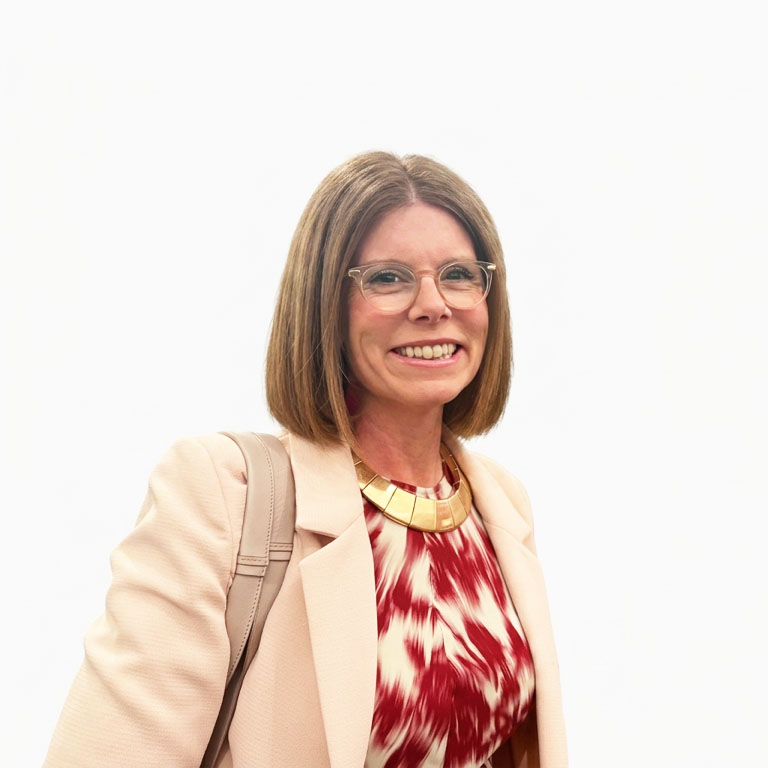
Helen Collie is a Chartered Structural Engineer with over 15 years of industry experience across design and forensic consultancy work. In 2020, she joined HKA’s Forensic Technical Services (FTS) practice in London, becoming a Partner in 2023.
Helen is a specialist in forensic engineering work, with expertise covering structural steelwork, reinforced concrete design and defects, water leakages, seismic assessments and design liability issues.
She spoke to us about her background, her experience in forensic engineering, and her broader contributions to the industry.
Helen, tell me about your background.
My interest in engineering began in sixth form, when I took part in an Engineering Education Scheme (EES) with a consulting firm called WhitbyBird & Partners, which I then went on to work for in my gap year. I ended up studying Civil Engineering at University College London (UCL), and carried on working for that firm throughout my time there. After a brief period at BDP, I went to Thornton Thomasetti (TT), where I worked for just under 11 years in total, in two stints split by time at William J Marhsall & Partners, an expert firm. TT was primarily design consultancy work in structures in the UK (I was based in London), but also the Middle East. I got Chartered in 2012. I was involved in forensics from quite early in my career, but worked across disciplines for many years.
What drew you to structural engineering as a discipline?
It was partly because that’s what I knew. I’d worked on the EES project while at sixth form and our industry partners were structural engineers. I went to an all-girls school, as the only one who wanted to study engineering in my whole year, and there wasn’t much careers advice about the field. What drew me to engineering more generally was the problem solving. I was always good at maths and physics, and I liked the practical application of that knowledge. I didn’t really consider other engineering disciplines because I didn’t know about them!
What made you want to specialise in forensics?
It was really by fluke I found my interest for it. I spent a year working in Chicago with TT, where there was a large forensics team. Taking that opportunity to get a bit of diverse experience, I found the process fascinating. I liked unpicking what had happened and spotting patterns. On top of that, I found learning about the legal side of things really interesting. Then, after I came back to the UK, I would put my hand up whenever forensic work came up – and I decided to do an MSc in Construction Law to really delve into that world. I ended up in New Zealand after the earthquake in Christchurch in 2011, carrying out damage assessment work and providing litigation support mostly for insurance companies. I was lucky enough to get into forensic work quite early and then do it alongside design for a long time which gave me a unique perspective.
I didn’t commit 100% to forensics for a few more years. I continued to work across both design and forensic work. But then, in 2020, I decided that I had enough experience to make the transition, had enough contacts and knew the industry well enough. I joined HKA that July.
Was there anything particular that drew you to HKA?
It was primarily the people. I met Doug Neville, who was Partner before me in the civil and structural team, alongside Peter Caillard, who’s still here. They were really enthusiastic about the work, and very experienced experts. HKA has such wide exposure to lawyers and so many interesting cases. I was also excited by how many technical experts there were, because the office I’d been in before only really had me specialising in litigation support in the UK. Coming to HKA, there were whole teams of people doing expert work across a huge variety of disciplines.
I’ve now worked with most people in FTS at HKA on either a project or a proposal, and my team has worked with every discipline – we work especially closely and often with Architecture. It’s great to be in a company where all of the technical disciplines are covered. Not only can you get on a project where they’re engaged, you can also bounce ideas off people and you are constantly learning. That’s really useful for me, but it’s also really useful for our clients.
Talk to me about the variety and the scope of the projects you’ve worked on.
The most challenging design projects I’ve been involved in were those in the Middle East. Not necessarily technically, but because of the timescales involved. We were doing a lot of design work quickly and accurately, and in some cases, involving new challenges that we’d not come across in UK work.
In the UK, I did a lot of work on school design. What I really enjoyed about that was the coordination, because their layouts are very particular, but every school was different and posed different challenges. You kind of got a bit of everything in terms of design – long span structures, heavily loaded structures, bespoke MEP and a lot of coordination with architects, as well as the full range of materials. I was exposed to a huge variety of projects and jurisdictions in my design work.
It’s difficult to pick out the highlight of forensic work, but New Zealand was an amazing experience. I flew out about two days after the 2011 earthquake. I was only there for six months, but our team set up an office from scratch and at first triaged buildings in the CBD, which had been really badly affected . It was very fast-paced and we were developing our own methodologies while being briefed by SESOC on safety, how we should be looking at design and remediation and codes. TT had engineers from around the globe there to learn from. It wasn’t a long period of time, but I probably learned more in six months than I’d have learned in three years doing forensics from a desk.
Are there any other projects that you feel you learned from particularly?
There’s a particular Middle East infrastructure project that I worked on which involved very complex engineering, as well as being complicated legally and politically, in terms of the relationships of parties in the dispute and the project team. I really enjoyed navigating those kinds of challenges and understanding what everyone’s viewpoint was. It was the first project where I’d been in extensive joint meetings and got to see that dynamic, as well as with Counsel which is another dynamic again. It was that experience which made me think, “I get this process, and I can pursue this full time.”
What’s the key to successful expert witness work?
It’s really important that you stop thinking entirely as a designer. In design, you only have to come up with one right answer (though you might explore several). In forensic work, you have to consider everything that could have gone wrong. It’s difficult to explain without doing, but it’s like putting together a puzzle of technical information, new analysis, old analysis, correspondence, what people were saying at the time. You might have to explore lots of different ways that could have been right, for example. The other thing that’s really important to me is taking pride and care in the writing of reports, which is not something that every engineer can do or wants to do. It’s crucial that the report sets out all of the detail and all of the reasoning in a way that’s accessible and succinct.
It’s very different communicating with a design team and a contractor, say, than it is communicating with lawyers. You don’t want to simplify things necessarily – you want to set out all the technical detail, but in a way that someone without a technical background can understand.
Can you talk about your experience of cross-examination?
I’ve been cross-examined once in a Dubai arbitration – it took place in the middle of COVID, so it was remote. Until you’re in it, you don’t realise how intimidating it is – though the training does set you up well, it’s nothing compared to the real thing. You’re probably never going to call the experience fun, as such, but there are projects where I’ve been really disappointed not to get to hearing, because you spend so much time working on an investigation and robust report. You want to show that and do the best for your client and make sure the decision makers can properly assess that information. I barely slept the night before I was cross examined, but after it was done, I felt a genuine buzz.
What are some other roles you have outside of HKA?
Outside of my role at HKA, I’m very involved in the Institution of Structural Engineers (IStructE). I chair the business practice and regulatory control committee, and because of that I sit on the engineering leadership group and I’m a member of council. I’ve also recently become a member of the newly formed Risk Skills Advisory Group. An ex-colleague, Tanya DeHoog, was the President of the IStructE, and is a real champion for female engineers, making real strides to increase the number of female fellows. I was awarded fellowship with her mentoring. It was really then that I became reacquainted with the IStructE. As a structural engineer, I wanted to give something back to my industry. I also think because I do something quite specialist, I have a viewpoint that wasn’t that well represented. And I wanted to be visible for other women in the industry.
I like to hear about and understand the context in which I’m working as a structural engineer, chat with others, and to contribute to discussions that genuinely shape the direction of travel. It’s very relevant to my role at HKA, for example I’m chairing a risk conference in June, which will no doubt reflect a lot of the matters we’re seeing.
If you would like to find out more about joining HKA,
visit our careers page.
This publication presents the views, thoughts or opinions of the author and not necessarily those of HKA. Whilst we take every care to ensure the accuracy of this information at the time of publication, the content is not intended to deal with all aspects of the subject referred to, should not be relied upon and does not constitute advice of any kind. This publication is protected by copyright © 2026 HKA Global Ltd.