





Article

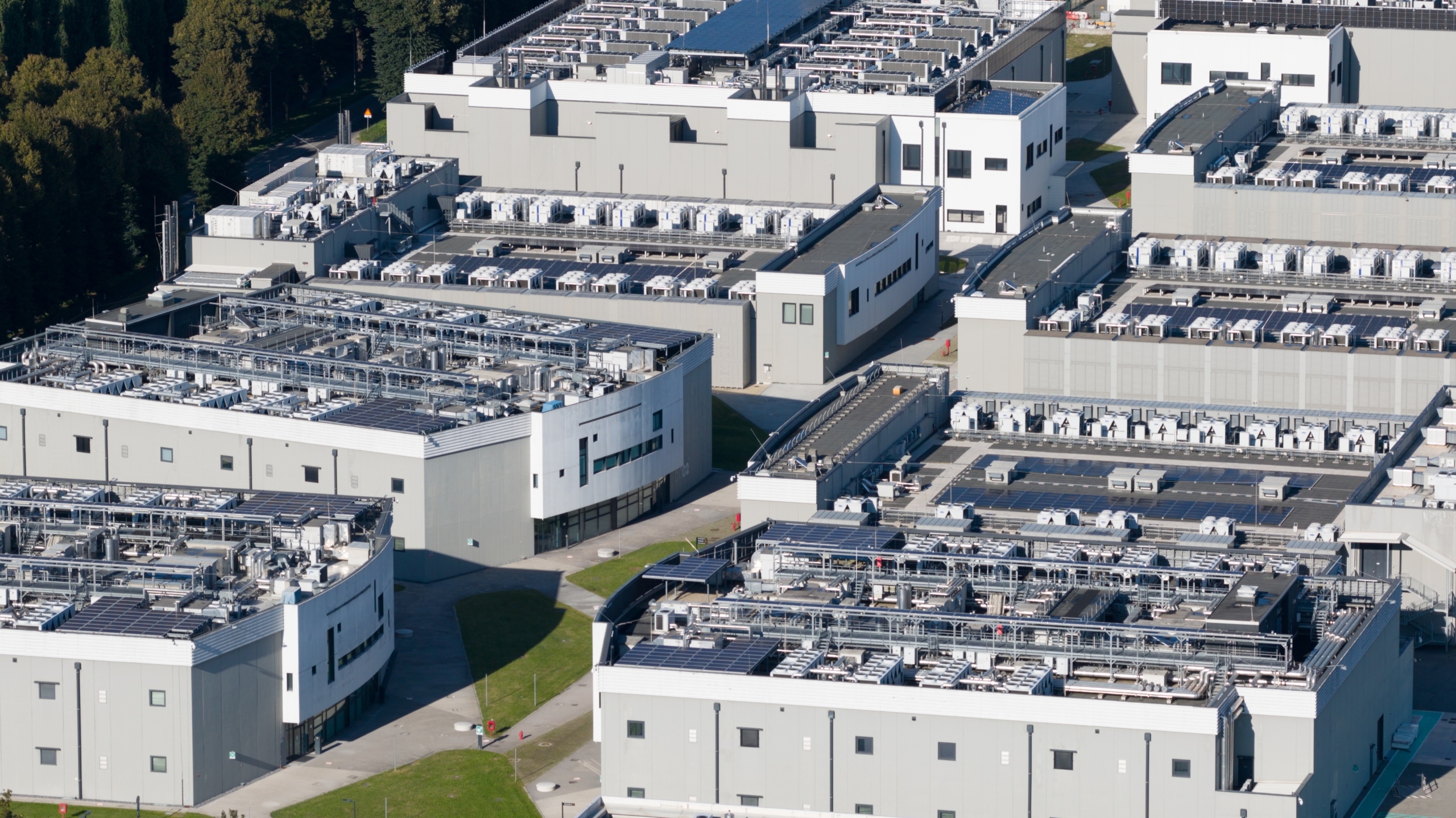
As global data center construction accelerates, so does the risk of disputes. Many stem not from legal issues, but from design, scheduling and systems integration challenges that emerge during delivery. Some of HKA’s data center dispute experts Gerry Brannigan (Glasgow/London, UK), Scott Hollingsworth (Chicago, USA), Jorge Berrios (Miami, USA), Ken McLean (Glasgow, UK) and Alex Lee (Edinburgh, UK) and explain the most common causes of conflict and practical steps to avoid them.[1]Projects cited as examples are anonymised composites, used for illustration only
Data centers share many of the underlying problems seen on other major builds, but have characteristics that compound complexity and heighten the risk of conflicts.
The most striking difference is their sheer density of electrical, mechanical and plumbing (MEP) services – MEP value per square metre exceeds that of a modern hospital or smart office block. Power densities over 100 megawatts, and now approaching a gigawatt, demand power plants and cooling systems far more complex than those found in buildings of similar scale. These requirements are considerably more demanding than those for traditional buildings and amplify the risk of delivery coordination failures.
Speed of delivery is a challenge shared with other types of projects. But with data centers, there is added impetus from this market’s rapid development and its tech clients who are themselves fast-moving and demanding.
As AI applications, model training and cloud computing drive demand for data processing, construction programmes tend to be tight – often 12 to 18 months – while the pace of technological change, particularly in cooling, is also rapid. Liquid and direct-to-chip cooling is replacing fans as advanced AI chips generate more heat and rack capacities can leap to well over 100kW.
The technical, design and integration challenges involved leave little margin for error. Yet, significant changes are often needed once the end user’s requirements are finalised. Adapting designs mid-build raises risk, and long lead times for sophisticated equipment put further pressure on a project’s critical path. Minor coordination failures can escalate into major commercial, operational or reputational damage, and disputes. The seeds of this conflict are often sown early and may not manifest until much later in the project lifecycle.
Design clashes, delays and installation defects can stay hidden as work progresses, only to surface at commissioning, when rigorous integrated systems testing (IST) exposes failures and disputes begin to crystallise.
Systems integration is critical in data centers. Cooling plant power, building management systems, IT operations load management and multiple other systems must communicate seamlessly — even a loss of cooling lasting seconds can damage water-cooled processors. When testing reveals flaws this late in the project, remedial work can be costly, and responsibility is likely to be disputed.
On one US project, transformers experienced arc flashes during early commissioning. Investigation traced the fault to high-resistance connections – conductors that had not been terminated to manufacturers’ specifications. In this case, no major fire damage resulted, and after inspecting a sample of other units, the owner avoided further failures across hundreds more transformers by ensuring all were properly torqued.
This is why proactive, continuous testing matters more than on most other types of building. Clear responsibility matrices – particularly at the interface between power and IT infrastructure – identify scope gaps, communicate responsibilities, and reduce the opportunity for disputes. Early and continuous inspection of assets and components (checked against detailed acceptance criteria as installation proceeds) helps limit defects later. Engaging an experienced commissioning consultant early adds real discipline to this process.
Design management is a fault line on many complex projects, data centers included. Where there’s a lack of design coordination the resultant confusion will likely give rise to disputes. On one Middle East project, for example, the consultant’s design was poorly detailed, and disagreements followed over the production and content of drawings – design, working, installation and shop drawings alike.
With vague contract documents and under pressure to proceed, the general contractor rushed out electrical containment drawings for trade contractors. On completion, the client claimed access to cables in the electrical switch rooms was inadequate and equipment poorly coordinated. The contractor countered that the original designs were inadequate and this level of coordination fell outside its responsibility. Early, well-defined design interfaces and responsibility matrices help avoid these last-minute disputes.
Design responsibilities – including the contractor’s design portion – need to be clearly defined, allocated, and set out in the contract. In the UK and Europe, a framework such as the BSRIA BG6 guide (A Design Framework for Building Services) helps determine who does what during design and construction. It is not applied consistently across all projects but should be incorporated into the contract bundle.
In the US, no single unified framework exists for building services. Instead, projects rely on a combination of standards, guidelines, and project-specific documentation. The Owner’s Project Requirements (OPR), Basis of Design (BOD), Level of Development (LOD) matrices within BIM Execution Plans, and formal commissioning plans all serve to establish roles, responsibilities, and deliverables across project phases. Done well, these documents can provide the structure and accountability that reduce ambiguity and enable more efficient collaboration, improving the odds of delivering a data center successfully.
Scheduling conflicts on complex projects may make delay inevitable, but delay can also be overlooked or concealed.
In the core and shell phase a concrete pad may not be poured properly, or later, delivery of owner-furnished, contractor-installed (OFCI) equipment may be delayed. A general contractor, in an attempt to show timely completion, may take steps to minimize or eliminate the apparent impact on the substantial completion date. An expert schedule review can reveal red flags – like reducing weather allowances, compressing forecasted activity durations, or stacking trades – that could indicate masking delay. Proactive, accurate and transparent communication of delay impacts can facilitate timely and reasonable dispute resolution.
A mismatch between the scope of subcontract works and general contractor’s schedule also raises the risk of delay. Having identified this, one electrical subcontractor retained HKA to integrate its schedule and scope with the general contractor’s programme. The subsequent delays that did occur were due to reasons outside of the electrical subcontractor’s control – late installation of OFCI equipment – forcing the subcontractor to pull cabling it could not yet terminate. The subcontractor’s detailed scheduling and contemporaneous documentation of the impacts proved that the critical path delay was not its responsibility and helped support its claims for additional related costs to recover delays by others.
Investing time and resources in upfront planning pays dividends. Parties should define, in detail, who does what and who takes responsibility on handover. This also helps secure buy-in from subcontractors. Developers and owners procuring critical-path equipment should communicate clearly with contractors, vendors and subcontractors about delivery timings. All parties need to identify and eliminate hidden assumptions in schedules, keeping stakeholders apprised as the integrated programme changes.
These are significant and growing. Data centers look like buildings, but function more like national infrastructure. Consumption of power and water is heavy – despite use of closed-loop dry coolers and adiabatic cooling to reduce evaporation in certain designs. Disputes arise at the intersection of community buy-in, connectivity, grid capacity, water demand, national utility policy, environmental assessment and planning permission. Local communities may effectively demand a ‘social licence to operate’ before a facility secures approval and ongoing acceptance, even informally.
Regulatory and environmental cases cluster around two areas: site selection and pre-consent; and environmental assessment and consent. Stakeholders who underestimate grid constraints, water stress or biodiversity loss increase the risk of such disputes. Gaps in an impact assessment can undermine a planning application. In the UK or Europe, this may extend to indirect impacts and Scope 3 greenhouse gas emissions. In the US, polls show mounting public opposition. Over the past two years, $18 billion worth of US data center projects have been blocked and a further $46 billion delayed due to organised resistance from residents and activists. The UN has warned that energy demand is outstripping infrastructure capacity, in various countries.
Developers’ desire to ‘speed the build’ increases these regulatory and environmental risks as well as those around design, equipment delivery and workmanship. Hard issues – site selection, environmental impact, and risks of regulatory obstacles or cancellation – must be properly owned from the outset, ideally before pre-consent. Public claims should reflect technical realities and be rigorously evidenced rather than rhetorical, and any change to design, technology or strategy should be communicated clearly to maintain stakeholder trust. Social licence must be earned, not assumed.
Data center delivery demands flexibility – from responding to regulatory shifts to managing supply chain delays or adapting to changing options for behind-the-meter generation. The overriding aim should be to align owners, contractors, consultants and suppliers behind a common goal, so all share the same programme objectives and operational expectations. Where parties begin with the end in mind, identify problems early, and address them openly, lengthy disputes can usually be avoided. In practice this means:
Fast-track data center teams often build good working relationships and resolve problems informally, which is efficient and admirable. But informal agreements should not substitute for contract notices. Relationships can sour towards the end of a project. Document a project as if it’s heading to arbitration but proceed with goodwill as if it won’t.
The party that has documented cost and schedule impacts typically benefits most in disputes or settlement discussions. That means making good use of 3D reality capture at key milestones – updating models with field validation, photographs, testing records and, for example, scanning an MEP plant room before commissioning.
The cost is negligible, but those records have value well beyond any one dispute – they can sharpen future bid estimates, refine productivity assumptions, and provide a well-informed reference for the next data center project.
HKA supports data center owners, developers, operators, contractors, insurers, and legal teams at every stage of the asset lifecycle, helping safeguard uptime, maintain operational resilience, and protect service continuity. Find out how our data center experts can help you.
| ↑1 | Projects cited as examples are anonymised composites, used for illustration only |
|---|