Seeds of Resilience: Environmental Damage and Recovery in the Middle East Conflict

Article

Seeds of Resilience: Environmental Damage and Recovery in the Middle East Conflict

by Matt Ösund‑Ireland

The conflict in the Middle East is of grave concern, not just for the thousands of innocent people caught up locally, but also globally, as economic conditions tighten. Beyond the human tragedies and the rising cost of living, the conflict is creating environmental and social impacts that are already visible today, with many likely to endure for a long time to come.

The purpose of this article is not to provide a comprehensive review but to highlight some of the immediate and long-term effects. It draws on my personal experience of living and working in the region, as well as lessons from the 1990-91 Iraq invasion of Kuwait.[1]

Burning Oil: The Right to Breathe

Global media outlets captured the conflict in Kuwait with stark TV images of thick black smoke billowing from blazing oil fields. An estimated five million barrels worth of combustion-related pollutants were emitted into the air every day.[2] Similar scenes are apparent today, for example in the recent images of the oil refinery and fuel storage tanks near Bahrain airport.

There is, however, one crucial difference, proximity. Unlike the oil fields of Kuwait, these current facilities are located close to residential communities.  Short-term health impacts could be significant and would most likely be evident in rising hospital admissions. The longer-term effects will only become evident over time and may become harder to link directly to the conflict. 

Leaks and Deposits: Loss of Marine Habitat

In 1991 some four million barrels of oil were deliberately dumped into the Persian Gulf with the intention of blocking an amphibious landing. This became one of the largest oil spills in history, heavily contaminating beaches, sediments, mangroves, and coral ecosystems. The impacts of this spill were exacerbated by the atmospheric deposition of pollutants associated with the burning oil wells.

There are parallels with today. Not least, the recent bombing of Kharg Island, which, if it continues, could result in a significant oil spill of a similar scale to that in 1991. Kharg Island typically exported 1.3 to 1.6 million barrels of oil per day (increasing to three million barrels per day earlier this year in anticipation of conflict), and with 18 million barrels stored on the island facility.[3]

Conflict Waste: What Remains in the Soil

Conflict generates large volumes of waste, including hazardous waste, not only because of damage to assets and infrastructure, but also through military activity itself. A visit to the Iran-Iraq border in 2014 confirmed that extensive physical evidence from the 1980-88 war remained present in the landscape. Windblown sand now camouflages discarded ammunition, personal kit, food and spent fuel containers, packaging and vehicles as the environment begins to reclaim the land.

Similar scenes could be observed following the Iraq invasion of Kuwait, although less visible, l, was the depleted uranium from munitions used by the international coalition forces. These remnants remain highly hazardous to both humans and ecosystems, due to their persistence and potential for bioaccumulation over the longer term.

Access to Safe Water: A Human Right

There is increasing discussion about damage to power and desalination plants in the Gulf and the subsequent risks to maintaining clean water supplies for sanitation, drinking water and agriculture.[4] Any reduction in the working capacity of power and desalination plants and wastewater treatment will place more pressure on groundwater abstraction, which, almost without exception, is already unsustainable.[5]

Much of the drinking water supply in the region is bottled and transported by road, suggesting some resilience with increased access to external supplies. How sustainable this would be in the long term remains an ongoing question.

Seasonal changes will impact any vulnerabilities in resident populations. This is the ‘goldilocks’ time of year in the Gulf; nights are not too cold, and days are not too hot, in fact, it’s just right.  However, this will change within months as summer approaches and temperatures rise, often above 50°C.[6] Damage to power stations or distribution infrastructure will reduce air-conditioning capacity, presenting significant challenges for households, hospitals, schools and food distribution.

Restricted access to water, cooling and food will have immediate and lasting impacts on local communities, in particular the young and the elderly.

Lessons from Kuwait: Multilateral Compensation

The invasion of Kuwait in 1990 and the subsequent Allied pushback in 1991 resulted in approximately $3 billion awarded in compensation for environmental and public health damage.[7] The pollution blanketed air, water, and soil across Kuwait and neighbouring states. This award formed part of a larger United Nations Compensation Commission (UNCC) settlement and was funded primarily by a percentage share of Iraq’s oil export revenues.

One further outcome of the UNCC compensation package was the establishment of the Kuwait Air Compliance Management Program, a long-term monitoring joint initiative of Kuwait Oil Company and the Kuwait Environmental Protection Agency designed to identify the extent of air pollution in Kuwait and to develop a strategy to reduce its impact.[8] Parts of this programme continue to this day with specialists from Germany, India, Kuwait, the Philippines, Spain, Sweden, the United Kingdom and the United States having contributed. The programme has provided an extensive and long-term evidence base of emissions data, ambient air quality and assessment of health impacts.  Having had a long-term involvement with this program I have seen a lot of changes over the decades. Abandoned vehicles and bullet-marked buildings have been cleared, and vast tracks of oil-contaminated sand now weathered and largely remediated. However, the memories of that time remain with the people and can still surface in conversation over a cup of tea.

Who pays? Evolving Approached to Environmental Accountability

Responsibility for the environmental and social cost of the current conflict remains undecided.

Traditionally the international regime of state responsibility has focused on bilateral relations (i.e. claimant/victim vs. respondent/tort-feasor). However, the UNCC introduced a new multilateral approach, recognising shared accountability of all states involved for the safeguarding of common concerns to protect and conserve the Earth’s natural heritage, irrespective of territorial boundaries.[9]

This legal accountability included:

  • precautionary monitoring to identify and assess long-term environmental risks
  • reimbursement of mutual assistance costs during environmental emergencies
  • obligation on claimants to mitigate and contain further damage;
  • valuation methods to ensure the remediation of lost ecological services
  • follow-up tracking to ensure remediation complied with agreed environmental objectives and standards (so-called ‘green conditionality’)

Whether this multilateral approach could be adopted for this current conflict remains to be seen. However, the precedent shows that environmental damage rarely respects borders and meaningful recovery requires cooperation across communities and ecosystems, not isolated interventions.

Matt Ösund‑Ireland

Partner

mattosund-ireland@hka.com

Expert Profile

Matt Ösund‑Ireland is a Chartered Environmentalist with more than 30 years’ experience advising governments, commercial organisations, and financial institutions on environmental strategy, compliance, impact assessment, and due diligence. His work spans air quality, climate change, carbon management and emissions reduction across aviation, transport, energy, manufacturing, and large‑scale infrastructure.

Matt has worked globally, including in regions affected by conflict, providing technical assessments and resilience planning in challenging regulatory and environmental conditions. A proven expert witness, he has testified under cross‑examination and supported major projects valued at up to £15 billion.


References

[1] What Was the Gulf War? | Imperial War Museums

[2] Iraq Burns Kuwaiti Oil Wells | History | Research Starters | EBSCO Research

[3] Kharg Island Statistics 2026 | Key Facts – The Global Statistics

[4] How targeting of desalination plants could disrupt water supply in the Gulf | US-Israel war on Iran News | Al Jazeera

[5] Groundwater sustainability assessment in the Middle East using GRACE/GRACE-FO data | Hydrogeology Journal | Springer Nature Link

[6] Weather in the Gulf Cooperation Council – statistics & facts | Statista

[7] State of Kuwait | United Nations Compensation Commission

[8] KOC E-Magazine

[9] (2) Compensation for Environmental Damage from the 1991 Gulf War


Media contact 

NameJill Dawson
TitleSenior Marketing and Communications Manager
Emailjilldawson@hka.com

The Regulatory Marathon: Keeping Pace with FCA Supervision

Article

The Regulatory Marathon: Keeping Pace with FCA Supervision

By Priya Giuliani

Over £186 million in fines, five criminal convictions, and a seven-fold increase in cancelled authorisations show that the Financial Conduct Authority (FCA) is running faster than ever. Navigating FCA supervision is not a sprint. It’s a marathon requiring stamina, strategy, and foresight. The regulator is setting the pace with data-led oversight and assertive interventions. If your compliance framework is not trained for endurance, you risk hitting the wall when the FCA comes calling.

This article explores:

  • How FCA supervision is evolving
  • The tools in the regulator’s kit
  • Practical steps to help your firm keep pace

The Direction of Travel

Be in no doubt that fighting financial crime remains at the centre of both government and regulatory agenda despite the broader focus on economic growth. Recent activity confirms this focus:

  • New Anti-Corruption Strategy (Dec 2025):[1] 123 commitments including reforms for the FCA to become the single professional services AML supervisor and expanded use of sanctions, signalling continued focus on integrity despite wider deregulatory themes
  • New Fraud Strategy (Mar 2025):[2] commitment to invest over £250 million between 2026 and 2029 to combat fraud, the largest reported crime type in England and Wales
  • First enforcement against a professional body supervisor (Nov 2025): censuring the Institute of Certified Bookkeepers for failures in its oversight under the Money Laundering Regulations (MLRs),[3] further supports the need for stronger oversight in this sector.
  • FCA’s strategic priority[4] emphasis on financial crime through stronger and faster interventions alongside fewer but more impactful formal investigations.[5]
  • Upcoming FATF Mutual Evaluation (due 2027): expect continued focus and change. In the pipeline are changes to the due diligence and information sharing requirements in the MLRs.[6]

These developments, and more to come, set the tone for a more assertive supervisory approach.

More Assertive and Data-Led Supervision

The FCA is running faster than ever, powered by data, technology and intelligence. If you’re still warming up while they’re already at mile 10, catching up will be tough.

Their portfolio-based model means they can spot harm early and intervene before you’ve reached the first water station. Recent enforcement data signals that the FCA is prioritising speed and deterrence, over lengthy investigations. Open enforcement operations fell from 188 to 130 during the year to March 2025, 37 final notices were issued, five criminal convictions were secured, fines exceeded £186 million and 1,456 firms had their authorisations cancelled.[7]

Advances in technology are powering more intrusive supervision. The FCA has expanded the population,[8] uses synthetic data to test sanctions screening tools,[9] and is piloting similar techniques for transaction monitoring. Inspections are rising too: 6% of firms were subject to desk-based or onsite reviews, a 15% increase, supported by a 22% growth in financial crime supervision headcount and the creation of specialist sanctions and fraud teams.[10]

Common failings persist: weak AML knowledge, inadequate policies, poor Customer Due Diligence, and misuse of Simplified Due Diligence. The FCA has been clear that firms which recognise issues early, take responsibility, remediate thoroughly and pay redress where necessary will be treated differently than those who delay or obfuscate.[11]

The Regulator’s Toolkit: A Growing Arsenal

The FCA’s toolkit is extensive[12] and increasingly deployed. Voluntary requirements (VREQs), variation of permission, Skilled Person reviews, attestations and own-initiative measures can be combined for maximum impact. These interventions can reshape business models, halt revenue streams, and demand significant resources. Firms that have endured them often speak of the scars left behind.

Skilled Person Reviews: The Ultimate Endurance Test

Think of a Skilled Person review as hitting ‘the wall’ in a marathon. It is painful, costly, and avoidable with the right training. These reviews appoint independent experts to assess systems, controls or conduct, and often recommend remediation. The majority to governance, controls, risk management, conduct and financial crime issues.[13]

Skilled Person reviews are highly intrusive, lengthy, take attention away from growth averaging[14] £690,0000 and often lasting 18-36 months for smaller firms, considerably longer for larger ones.  They are often combined with VREQs, which tend to curb revenue, so firms end up in a double whammy situation of higher costs and lower (or no) revenue.

Skilled Persons are also used in ‘monitorship’ roles while firms carry out remediation to provide the FCA with assurance that adequate progress is being made and any risks in the interim are mitigated appropriately. Our experts have been previously appointed in Skilled Person roles to:

Enhance a firm’s correspondent banking framework after multiple failed attempts to do this in-house, in a timely manner, that met the required standard.

Provide assurance over trade finance transactions prior to execution until the framework was fully remediated and embedded.

How to Prepare

Leaders should have confidence that their frameworks are robust, meet regulatory requirements & expectations, and demonstrate good industry practice. Confidence in your framework comes from credible assurance. Yet firms often stumble when internal or external auditors lack deep subject matter expertise, when scope is narrowed by cost, or when overseas internal audit teams misunderstand local requirements. Cultural barriers, such as fear of highlighting issues, compound these weaknesses, leaving senior management unable to exercise appropriate oversight.

If a Skilled Person appointment looms, act immediately. Engage experts with a proven track record to manage regulatory dialogue, shape strategy, and identify suitable candidates for the appointment. Most appointments (87%) allow the firm to nominate their preferred Skilled Person which will be considered for approval by the FCA (indirect appointment). Whilst the FCA has a panel for its own direct appointments, it is clearly stated on Requirement Notices and the FCA website that a firm can nominate any suitable firm to be their Skilled Person. The firm is responsible for assessing whether a Skilled Person is appropriate for its requirements.[15] Selecting the right firm, one which provides independence from you and the FCA, and applies senior judgement to truly assess a risk-based approach, is vital. The selection of the right Skilled Person for your business need is critical.

Unless you have a VREQ, which stops the majority of your business and therefore you can divert resources, it is likely you will need additional headcount to get through the review in as short a time as possible. The Skilled Person needs access to most parts of the firm, access to systems & controls, and a ton of evidence. The firm will need to ensure there are clear communication protocols in place and maintain their own log of information provided. Most firms find it helpful to prepare their workforce ahead of the visit to minimise disruption.

Scope creep during a Skilled Person appointment is a valid concern, however, the review should be guided by the Requirement Notice which typically is not open ended. If you think the Skilled Person appears to be going beyond the required scope, it is appropriate to question this. Bear in mind, where firms’ cultures do not encourage speaking up, we have observed on occasion that staff use the Skilled Person as an informal whistleblowing channel which may extend the scope, but this should be done in a transparent way in dialogue with the regulator.

It can’t be overstated that those firms that prepare early with robust frameworks rarely face this endurance test.

Voluntary Requirements: The ‘Voluntary Headlock’

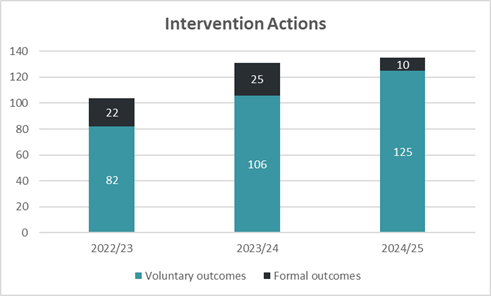
Voluntary Requirements are anything but voluntary – they can feel like a headlock.  But they are increasing with a 52% increase in voluntary actions in the last two years. Notably firms are more cooperative in accepting voluntary requirements rather than the FCA imposing them formally, reflecting the regulator’s preference in many cases for swift agreed measures that deliver consumer protection and deterrence. However, these intervention actions can be the end of the road for smaller firms as they can stop all revenue, and remediation needs to be funded from reserves and shareholder injections. Capital and liquidity plans may be required to demonstrate how the firm will survive the period ahead.

Voluntary requirements are designed to restrict activities and mitigate risks swiftly. In those instances, where firms do not agree to voluntary requirements, the FCA can formally impose OIRECs. Refusing a voluntary requirement may raise questions about the firm’s cooperation with regulatory intervention, and it may struggle to rebuild a constructive dialogue for the future.  

The FCA uses VREQs as they encourage senior management engagement and mitigate risks swiftly. But, once a VREQ is place, and the risk is mitigated (for example, because there is no business, therefore no risk), the pressure to remediate and lift the VREQ falls on the firm.

VREQ’s can be difficult to operationalise. Agreeing to a VREQ without planning is like starting a race without hydration. You’ll quickly run out of steam. Recent breaches by Starling, Monzo, and CB Payments highlight the risks of weak governance and poor operationalisation. These failures were about execution, not intent. They show that poor planning can lead to serious compliance failures:

The common thread? Weak governance, poor communication, and inadequate testing.

In our experience, firms have signed VREQs without adequately considering governance arrangements and how they will operationalise their activity to comply with the terms. Removing a VREQ is equally challenging. It is typically removed after the FCA has the necessary assurance that remediated controls have been embedded and risks are being managed appropriately, typically through a Skilled Person review or other independent assessment. Strategic planning can offer possibilities to deviate from the norm.

Attestations: Mile Markers for Accountability

Attestations place personal accountability on senior leaders, requiring formal confirmation that actions will be taken, or completed, within a set timeframe. They are checkpoints: proof you are on track and not cutting corners. Failure to meet these commitments can escalate supervisory action and, under the Senior Manager’s Regime, increase the risk of individual enforcement. We are observing a larger number of individual fines. 55% of FCA enforcement fines (by number) related to individuals in 2025 and at the time of writing, 6 out of the 7 fines issued in 2026 are for individuals.

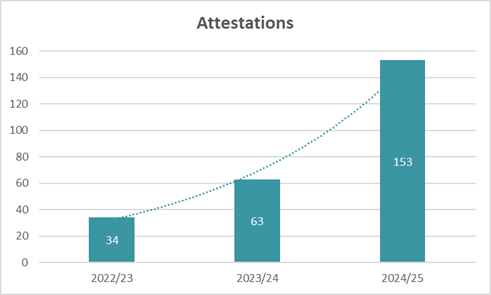
The number of attestations has increased exponentially, principally for thematic concerns. In 2024/25, the FCA had concerns that customer accounts may have been terminated due to their political beliefs, and in relation to thematic work relating to Consumer Duty outcome monitoring and product governance in the insurance sector.

Boards should treat attestations with the utmost seriousness, ensuring independent testing, strong evidence retention, and clear reporting lines.

Staying Ahead of the Pack

The regulator is increasingly assertive and data-led. It is resolving more issues through supervision, early interventions and voluntary outcomes, reserving formal enforcement for impactful deterrence. To stay ahead of the pack:

  1. Ensure the assurance you rely on is robust and credible to avoid in-depth supervision intervention.
  2. Act swiftly when supervisory tools are mentioned in discussions.
  3. Treat voluntary requirements and undertakings as firm-wide programmes, ensuring clear accountability, governance, communication and operationalisation.

The FCA’s pace will only quicken. Firms that prepare now will finish strong; those that don’t risk being left behind. Train early, pace yourselves, and stay focused on the road ahead to cross the line without injury.


[1] UK Anti‑Corruption Strategy 2025

[2] UK Fraud Strategy 2026-2029

[3] Final Notice 2025: Institute of Certified Bookkeepers

[4] Our strategy 2025 to 2030

[5] FCA Enforcement data 2024/25 | FCA

[6] MLRs_Consultation_Response.pdf

[7] FCA Enforcement data 2024/25 | FCA

[8] REP-CRIM is the financial crime data return which allows the FCA to be more data-led and broaden its understanding of firms’ risks. This information is used to underpin its risk-based supervisory approach.

[9] The FCA Sanctions Screening Tool (SST) is an analytics-based tool developed to objectively test how effective firms are at identifying sanctioned individuals and entities using test data.  

[10] Supervision_24-25_Annual_Report

[11] Do the right thing: Part II | FCA

[12] Voluntary Requirements (VREQ), Voluntary Variation of Permission (VVOP), Voluntary Directions under MLRs (VDIR), Own Initiative Requirements (OIREQ), Own Initiative Variation of Permission (OIVOP), Own Initiative Direction under MLRs (OIDIR), Own Initiative Variation of a SMF Holders Approval (OIVAP), Section 165 and Section 166 of the Financial Services and Markets Act 2000 (FSMA) – powers to request information and Skilled Person Reports, attestations, undertakings, redress, and, capital & liquidity measures.

[13] Skilled person reviews | FCA

[14] Five-year average

[15] Skilled person reviews | FCA

[16] Final Notice 2024: Starling Bank Limited

[17] Final Notice 2025: Monzo Bank Limited

[18] Final notice 2024: CB Payments Limited

About the Author:

Priya Giuliani is a specialist in financial crime investigations & compliance with nearly 30 years’ experience, including a decade as a Partner. She specialises in helping clients on a proactive basis to assess and manage the risk of financial crime including assessing governance, oversight, conduct, and training Senior Managers and Boards. Her investigative experience provides insight in to how various financial crime types (e.g. money laundering, terrorist and proliferation financing, sanctions and tax evasion, bribery, corruption and fraud) can occur, including through the use of professional enablers, and the controls required to manage these risks effectively. Priya has been appointed on many Skilled Person engagements. Widely regarded as a well-qualified and highly experienced expert in financial crime risk management and investigations. She understands risk well and works with clients to assess and develop proportionate and effective control frameworks.


Priya Giuliani

Partner

priyagiuliani@hka.com

Expert Profile


This article presents views, thoughts or opinions that are provided for general information purposes only. It does not represent the views of, or constitute advice of any form (legal, professional or otherwise) from, HKA or any of its affiliates. While HKA takes reasonable care to ensure the accuracy of its contents at the time of publication, the article does not deal with all aspects of the referenced subject matter and may not be relied upon as a substitute for professional judgement or independent analysis. Accordingly, neither HKA nor the author accepts liability for any use of, or reliance on, the information presented in the article. This article is protected by copyright © 2026 HKA Global, LLC/© 2026 HKA Global Ltd. All rights reserved.

​​​HKA appoints Francesco Capotorto as Director in Construction, Claims and Expert Services practice

News

​​​HKA appoints Francesco Capotorto as Director in Construction, Claims and Expert Services practice

HKA is pleased to announce the appointment of Francesco Capotorto as Director within its Construction, Claims, and Expert (CCE) Services business in London.

Francesco has supported experts and counsels on numerous dispute resolution engagements, predominantly in international arbitrations, as well as contractual adjudications, litigations, and negotiations, providing rigorous forensic delay analysis, evidence review, and strategic advisory inputs.

He brings more than two decades of experience in project management and dispute resolution across major EPC, energy, offshore, process industry, and infrastructure projects, working with leading organisations including Ankura, CBRE, Valaris, Seadrill, BP, Mitsubishi Heavy Industries Europe, and General Electric (GE).

He has significant experience across a wide range of industry sectors, including FPSO conversion and drilling rig upgrade disputes and a DAB delay analysis for a nuclear power programme in Europe. He has delivered delay and disruption analysis for a carbon capture and storage project in the Nordics, provided litigation support for delay analysis on a German food and pharmaceutical process plant, and undertaken delay analysis for gas terminal construction in the Middle East. His wider experience spans delay analysis for various types of power plant projects globally, along with engineering and construction delays on wind farm developments in the UK.

Francesco’s appointment enhances HKA’s offering in four key areas: enhanced delay and disruption analysis capability, expert witness support across high value mandates, broader technical and commercial insight for energy and EPC disputes, and strengthened European and Mediterranean market connectivity.

“Francesco brings a rare combination of technical depth, international dispute experience and commercial insight. His appointment strengthens our CCE’s capability and enhances our ability to support clients facing complex delay and claims challenges on major capital projects across Europe, the UK, and global markets.”

Paul Cacchioli, Partner

A Fellow of the Chartered Institute of Arbitrators (FCIArb) and a panel member of the CIArb Business Arbitration Scheme, Francesco holds an MSc in Construction Law and Dispute Resolution from King’s College London – Dickson Poon School of Law with merit, an MBA, and an MEng, and is APAEWE certified for expert witness evidence. He is fluent in English and Italian and has knowledge of French and Spanish. A dual British Italian national and native Italian speaker, Francesco brings valuable cultural and regional insight to HKA’s work across Europe and the Mediterranean. 

“HKA’s reputation in construction disputes and expert services is exceptional. I look forward to partnering with colleagues and clients to deliver clear, robust analysis and to help resolve complex delay and claims matters on major projects worldwide.”

Francesco Capotorto, Director

Media contact 

NameJill Dawson
TitleMarketing and Communications Senior Manager
Emailjilldawson@hka.com

Middle East Perspective: LNG market and long-term LNG SPAs

Article

Middle East Perspective: LNG market and long-term LNG SPAs

The recent escalation of geopolitical tensions in the Middle East is reverberating across global gas and LNG markets. Strikes on key regional LNG assets, combined with disruption to shipping routes, have created a supply shock, immediate price escalations and likely far-reaching contractual obligations.

Below is an overview of the emerging impacts, their likely consequences for LNG SPAs, and the areas where market participants would be advised to start preparing mitigation strategies.

Impacts on the LNG Market

Strikes in the Middle East and the shutdown of LNG production in Qatar

Strikes on LNG facilities across Qatar (Ras Laffan and Mesaieed), the United Arab Emirates (Das Island and Ruwais), and Oman (Qalhat) have led to unprecedented disruption in supply with Qatar alone accounting for around 20% of global LNG exports. The announcement from QatarEnergy on 02 March of a complete shutdown of its LNG production and the suspension of all tanker loadings triggered an unprecedented Force Majeure declaration with the historic drop in the global supply, an unprecedented move in 30 years.

Disruption in the Strait of Hormuz and its impact on the market

Iran’s announcement of the near closure of the Strait of Hormuz has stranded more than 150 vessels, including LNG carriers. China, the world’s largest LNG importer, which sources nearly one‑third of its LNG from the region is particularly exposed to disruption of Middle East supplies.

This disruption entails:

  • the removal of 1.6 to 1.8 Mt of LNG per week from the global market (estimated at ~411 Mt in 2024),
  • a reduced availability of LNG carriers;
  • an increase in freight and marine insurance costs;
  • an elevated risk of delays for deliveries to Asia and Europe, driven by diminished trade fluidity and congestion along alternative routes.

U.S. exporters, notably Venture Global and Cheniere Energy, are accelerating production in Texas and Louisiana and accelerate the commissioning of additional capacity, while buyers (particularly in Europe and Asia) are attempting to secure supply. Traders holding U.S. LNG cargoes are also reallocating volumes toward premium markets, where price signals have strengthened relative to the U.S;

  • TTF[1] (Europe’s benchmark for LNG pricing): ~$17/MMBtu (up 50% w/w);
  • JKM in Northeast Asia (Asia accounts for 80% of Qatar’s LNG exports): ~$14.6/MMBtu (up 40% w/w); and
  • Henry Hub (the U.S. benchmark price): relatively stable at ~$3/MMBtu (supported by ample domestic LNG supply).

An energy crisis that remains contained (at this stage)

Although the global LNG market is tightening, but is not, at this stage, experiencing a crisis comparable to that of 2021–2022. Gas prices remain well below the peaks at the beginning of the Ukraine conflict (around 117.5 $/MMBtu in Europe).

Several structural factors have helped absorb the shock and mitigate pressure on the market and on gas prices:

  • additional global supply compared with 2021–2022 (for example, the United States has added new LNG export capacity, becoming the world’s largest exporter in 2023);
  • most importing countries also hold inventories sufficient to cover 2 to 3 weeks of demand. European storage levels are not particularly low, unlike in 2021;
  • demand is seasonally low, with Europe exiting the winter period and Asia not yet entering the summer peak (“shoulder season”).

What scenarios for the weeks ahead?

This situation constitutes a significant shock for the gas market; however, its impact could remain contained if Qatar is able to resume production in a timely manner and if transit conditions in the Strait of Hormuz gradually normalise.

The key factors that merit close attention are:

  • the duration of the Qatari shutdown;
  • the return of operator confidence in safe transit through the Strait of Hormuz.

Some market commentators consider that if the closure of the Strait of Hormuz persists, or if infrastructure is durably damaged, the global gas market could face a shock exceeding that of 2022, notably because:

  • there is not enough uncommitted LNG to make up for a prolonged loss of the Qatari LNG volumes;
  • the global gas/LNG market is inelastic in the short term: a sharp increase in demand, and therefore in prices, cannot significantly expand supply, given current structural constraints; and in particular
  • U.S. LNG producers cannot increase their production to compensate for such prolonged loss, whereas in 2022 U.S. LNG was able to absorb part of the supply imbalance resulting from the halt of Russian gas flows to Europe (albeit on the back of high gas prices).

Potential impacts on LNG Sale and Purchase Agreements (SPAs)

QatarEnergy’s Force Majeure clause: notification, potential disputes, and scope of applicability

Through the shutdown of LNG production and the suspension of loadings, QatarEnergy is invoking Force Majeure suspending contractual delivery obligations. Buyers may seek to scrutinise:

  • the specific contractual definition of Force Majeure (e.g., “political events,” “war,” “inability to operate facilities”);
  • the duration of the Force Majeure period, with several analysts considering that QatarEnergy may be able to resume operations in approximately three weeks; and
  • the resumption date will be critical in determining the impact on the contract (some contracts may feature long-term Force Majeure that could allow contracts to be terminated after a prolonged period of Force Majeure).

Closure of the Strait of Hormuz: delays, penalty exposure, and clauses that could be invoked

Prolonged transit closure of the Strait of Hormuz could trigger several contractual implications:

  • Delivery delays that could give rise to liquidated damages, trigger laycan provisions[2], and result in demurrage charges;[3]
  • Potential renegotiation of cost pass‑through provisions;
  • Invocation of maritime impediment clauses, which are included in some contracts alongside Force Majeure provisions.

Increase in gas prices and potential implications for the LNG SPAs

Sustained increases in gas spot prices (ranging from up 40% to 50% depending on the region) may affect SPAs differently:

  • Contracts indexed to the spot market, alone or in combination with other benchmarks or indices, will increase buyers’ cost obligations;
  • Fixed‑price contracts, bring heightened risk of supplier default if the spot price exceeds the contractual price plus the replacement cost;
  • Potential invocation of hardship clauses[4], permitting a party to demand a renegotiation of the contractual terms, primarily the price, and to seek adjustments to specific obligations to re‑establish the contract’s economic equilibrium, thereby avoiding termination of the agreement.

For contracts that are still indexed on oil indices, the ongoing surge in oil prices may also have significant impact on the economic balance of the contract.

Risk of supplier non-performance (supply failure)

Supply failures may arise from:

  • QatarEnergy markets its long‑term volumes primarily through two entities: QatarEnergy Long Term Marketing (QELM) and its trading subsidiary QET;[5]
  • The LNG supplier ADNOC in Abu Dhabi is also experiencing disruptions from its Das Island LNG facility. The current situation may also impact the development and delivery of the new LNG export project of ADNOC, Ruwais LNG.

Buyers purchasing on an FOB (“Free on Board”)[6] basis from these suppliers are likely to be more adversely impacted than buyers operating under DES (“Delivered Ex‑Ship”)[7] contractual arrangements.

This temporary (or prolonged) inability to deliver the contractual volumes may, depending on the terms of the contracts, trigger:

  • requests for compensation for delivery shortfalls (“shortfall compensation”);
  • obligations to provide replacement[8] cargoes;
  • the risk of contentious proceedings should the buyer challenge the applicability of Force Majeure.

This risk of delivery default could also extend to portfolio players holding upstream volumes sourced from Qatar:

  • Portfolio players may not necessarily be able to declare Force Majeure in turn to their own customers;
  • In the absence of Force Majeure, portfolio players remain bound by their downstream delivery obligations, while facing a reduced upstream portfolio;
  • This may therefore result in delivery failures and contractual disputes regarding the level of compensation applicable to such delivery shortfalls (liquidated damages or the full cost of replacing the missing cargo).

Conclusion

The Middle East crisis represents a significant, though currently contained, disruption to global LNG markets. Its evolution in the coming weeks will determine whether the situation normalises or deepens into structural imbalance.

Beyond the immediate market effects, the crisis materially heightens the risk of contractual disputes under LNG SPAs. Key areas of exposure include the scope and duration of Force Majeure, obligations relating to delivery shortfalls and replacement cargoes, compensation and liquidated damages mechanisms, as well as potential hardship or price‑review claims triggered by sustained price dislocation.

In this context, parties should proactively assess their contractual positions, secure evidence relevant to potential claims or defences, and prepare for possible arbitration or litigation arising from contested interpretations of key contractual provisions.

Authors


Patrick Hebreard

Partner

patrickhebreard@hka.com

Expert Profile

Hermano Oliveira

Director

hermanooliveira@hka.com

Expert Profile


[1] The values for TTF, JKM and HH reflect Day‑Ahead market assessments.

[2] The “laycan” clause defines the time window (between two specified dates) within which a vessel must arrive at the loading port for the contract to remain valid. The laycan is the combination of the “Laydays” (the earliest date on which the vessel is permitted to present itself for loading) and the “Cancelling date” (the latest permissible date). If the vessel arrives after this date, the charterer may cancel the contract.

[3] Demurrage charges owed by the charterer to the vessel owner when the vessel remains in port longer than anticipated for loading and/or unloading operations (referred to as “laytime”).

[4] A hardship clause is a contractual provision intended to protect the economic equilibrium of the contract when unforeseen and exceptional events render the performance of the contract excessively burdensome or imbalanced for one of the parties. Courts and arbitral tribunals clearly distinguish hardship from a mere market risk: an event must be exceptional and not allocated under the risk‑sharing arrangements of the LNG SPA to qualify as hardship.

[5] QELM markets the volumes originating from the production facilities at Ras Laffan and from the North Field expansion, whereas QET markets long‑term supply on a portfolio basis and through third‑party arrangements.

[6] Such as Petronet (sourcing from QatarEnergy) and Securing Energy for Europe (sourcing from ADNOC).

[7] For DES contracts, suppliers are required to honour their cargo commitments, either by relying on their portfolios or by securing replacement cargoes on the spot market.

[8]Replacement cargo obligations”: In most traditional LNG long‑term SPAs, if the seller is unable to deliver the original cargo within the agreed delivery window, it is required to use reasonable efforts to reschedule the cargo. Should such rescheduling efforts fail, the buyer may cancel the delivery, and the seller must pay damages, the amount of which depends on the buyer’s ability to obtain a replacement cargo. Specifically, if the buyer succeeds in procuring a substitute cargo, the damages payable by the seller correspond to the actual costs incurred by the buyer in securing such replacement cargo.


This article presents views, thoughts or opinions that are provided for general information purposes only. It does not represent the views of, or constitute advice of any form (legal, professional or otherwise) from, HKA or any of its affiliates. While HKA takes reasonable care to ensure the accuracy of its contents at the time of publication, the article does not deal with all aspects of the referenced subject matter and may not be relied upon as a substitute for professional judgement or independent analysis. Accordingly, neither HKA nor the author accepts liability for any use of, or reliance on, the information presented in the article. This article is protected by copyright © 2026 HKA Global, LLC/© 2026 HKA Global Ltd. All rights reserved.

HKA appoints Matt Ösund-Ireland as Environmental Partner in London

News

HKA appoints Matt Ösund-Ireland as Environmental Partner in London

HKA has announced the appointment of London-based Dr Matt Ösund-Ireland as a Partner in its expanding Environment and Climate Change practice within the firm’s Forensic Technical Services (FTS) team.

Matt brings over 30 years of experience advising governments, corporates, and financial institutions on environmental, climate, and sustainability matters across more than 25 countries. He has supported complex, nationally significant and highly-regulated projects worldwide, with expertise spanning strategy, environmental compliance, impact assessment, due diligence, and climate risk. His technical specialisms include air quality, emissions and climate change, and his expert witness experience includes planning inquiries and giving evidence before a UK House of Commons Select Committee.

Prior to joining HKA, Matt held senior roles at Susteer, Wood, AECOM, and Mott MacDonald, among others. He has worked across a broad range of sectors including transport, energy, manufacturing, urban regeneration, large industry, and waste, supporting clients through disputes, regulatory scrutiny, and high-profile infrastructure developments.

A Chartered Environmental Scientist, Matt has led major international programmes and projects covering carbon foot printing, greenhouse gas inventories, climate resilience and adaptation planning, emissions reduction strategies, and climate related financial disclosure. He has also developed and delivered training programmes for industry, regulators, and government bodies, and is a contributing author to several UK technical and policy guidance documents.

“I am thrilled to be joining HKA at a time when climate risk and environmental compliance are shaping decisions in every sector. I have seen how powerful it is when diverse expertise comes together, and I am excited to bring that experience into HKA’s talented global team. The opportunity to collaborate, share ideas and help grow our international environmental capability is something I am genuinely looking forward to, especially as we support clients through increasingly complex challenges.”

Dr Matt Ösund-Ireland, Partner

Matt will work closely with HKA’s international teams to support clients across disputes, investigations and advisory engagements involving climate risk, carbon, environmental compliance, and sustainability related issues.

“Matt’s appointment reflects the growing importance of climate, carbon and environmental issues in our disputes and advisory work globally. He brings exceptional technical depth, a strong track record as an expert witness and a pragmatic, collaborative approach that aligns closely with HKA’s values. Matt’s experience will significantly strengthen our Forensic Technical Services capability and further support our clients on some of their most complex and high-profile challenges.”

Dr Kourosh Kayvani, Partner, and Head of Forensic Technical Services


Media contact 

NameJill Dawson
TitleSenior Marketing and Communications Manager
Emailjilldawson@hka.com

HKA Enhances Global Competition & Group Litigation Growth with Appointment of Mitesh Modha

News

HKA Enhances Global Competition & Group Litigation Growth with Appointment of Mitesh Modha

HKA is pleased to announce the appointment of Mitesh Modha as Business Development Principal for the International region, based in our London office.

This appointment reflects HKA’s continued investment in strengthening our global competition and economic disputes offering, deepening client relationships, and accelerating growth across competition, group litigation and commercial dispute mandates.

Mitesh brings more than 10 years of experience in business development, origination, stakeholder engagement, and cross-border commercial strategy. His career spans the UK, Europe, and the Middle East, with a strong track record of creating new market opportunities, shaping strategic partnerships, and supporting clients involved in high-profile and complex commercial claims, corporate governance matters, and class/group actions.

“HKA’s depth in expert evidence, economic analysis and disputes advisory work puts us in an exceptional position to support lawyers and their clients seeking expert economic/forensic input into their group and class actions, in addition to assisting clients facing heightened regulatory scrutiny and complex cross border challenges. I’ll be supporting our expansion across competition, group litigation, and commercial disputes, and building strategic relationships across international markets.”

Mitesh Modha

With experience at Woodsford, Kain Knight, and SettleFirst Consulting, Mitesh has operated at the intersection of legal strategy, corporate governance, financial risk, and commercial recovery. This breadth of experience aligns closely with HKA’s multidisciplinary expertise and services across competition, group litigation, and commercial dispute mandates.

“Mitesh’s appointment comes at a time when economic competition issues are increasingly shaping global disputes. He brings valuable international experience and commercial insight. His appointment strengthens our business development capability and supports our strategy to deepen client engagement across key international markets.”

Chris Williams, Partner and Head of Economics, International, HKA


Media contact 

NameJill Dawson
TitleSenior Marketing and Communications Manager
Emailjilldawson@hka.com

Contemporaneous vs Actual Critical Path: Clarifying a Key Distinction in the SCL Protocol

Article

Contemporaneous vs Actual Critical Path: Clarifying a Key Distinction in the SCL Protocol

Geoff Bewsey, Partner HKA

Same Term, Two Paths

The Society of Construction Law Delay and Disruption Protocol (SCL Protocol) describes two delay analysis methods in which the critical path is determined ‘contemporaneously,’ and delay impact is determined ‘retrospectively.’ With no other explanation, both methods are said to identify ‘the contemporaneous or actual critical path.’

In this short paper, I propose how the contemporaneous critical path and the actual critical path are distinct yet inseparably connected.

“… the contemporaneous critical path exists in the forecast portion of a programme[1]Or other planning for the works., whereas the actual critical path exists in the as-built portion, being developed from the sequential chain of contemporaneous critical activities over time.”

Understanding the Distinction

The SCL Protocol[2]Society of Construction Law delay and Disruption Protocol, 2nd Edition, February 2017. describes two analysis methods in which the critical path is determined ‘contemporaneously,’ and delay impact is determined ‘retrospectively.’

The ‘Time Slice Windows Analysis’ is said, in the SCL Protocol, to use a series of time‑slice programmes to reveal “the contemporaneous or actual critical path in each time slice period as the works progressed and the critical delay status at the end of each time slice, thus allowing the analyst to conclude the extent of actual critical delay incurred within each window[3]SCL Protocol, Guidance Part B, paragraph 11.6(c).

The ‘As-Planned versus As-Built Windows Analysis’ for which the SCL Protocol states: “The analyst determines the contemporaneous or actual critical path in each window by a common-sense and practical analysis of the available facts.… The incidence and extent of critical delay in each window is then determined by comparing key dates along the contemporaneous or actual critical path against corresponding planned dates in the baseline programme[4]SCL Protocol, Guidance Part B, paragraph 11.6(d)”.

Both methods rely upon identifying what the Protocol calls the ‘contemporaneous or actual critical path’ to determine actual delay within each window.

This introduces the concept of the ‘actual critical path’ which is not otherwise explained in the SCL Protocol. I therefore explain below my understanding of the distinction between the contemporaneous critical path and the actual critical path.

Looking ahead: What is the Contemporaneous Critical Path?

To understand this point, I find the below extract from Walter Lilly & Co v Mackay (No 2)[5]Walter Lilly & Co v Mackay (No 2) [2012] EWHC 1773 (TCC), [2012] BLR 503, to be most helpful:

‘Mr R [the claimant’s expert] had regard to the likely longest sequence of the outstanding work on a monthly basis as being the primary pointer to what was delaying the work at any one time. This was a wholly logical approach and, indeed is the approach used by most delay experts when there is a usable baseline programme from which to work. The logic is simply that if there are, say, two outstanding items of work, A and B, and A is always going to take 20 weeks to complete but B is only going to take 10 weeks, it is A which is delaying the work because B is going to finish earlier; overall completion is therefore dictated by the length of time needed for A. Put another way, it does not matter if B takes 19 weeks, it will be the completion of A which has prevented completion. Thus, if one is seeking to ascertain what is delaying a contractor at any one time, one should generally have regard to the item of work with the longest sequence[6]Walter Lilly v Mackay, note 8, para [378]..

The above extract describes how ‘what was delaying the work at any one time’ should be determined, using the term ‘the likely longest sequence of the outstanding work on a monthly basis.’ Mr R’s analysis, was carried out on a monthly basis, thus providing an evolving, contemporaneous view of the critical path, this being ‘the likely longest sequence of the outstanding work’ at any time. The ‘likely longest sequence of the outstanding work’ at any time is thus the ‘contemporaneous critical path.’

Pointing in the right direction:

The key to the relationship between the contemporaneous critical path and the actual critical path is seen in the above extract from Walter Lilly v Mackay in the phrase ‘as being the primary pointer to what was delaying the work at any one time.’ In practice, this forward-looking, likely longest sequence of the outstanding work, i.e. the contemporaneous critical path, is ‘the primary pointer’ which enables the analyst to assess ‘what was delaying the work at any one time.’

For each month, or other analysis ‘window,’ ‘the primary pointer’ is the activity at the start of the contemporaneous critical path, i.e. the activity of the path that is currently in progress or immediately about to start ‘at the time.’ This is the ‘contemporaneous critical activity’ and is taken to fall on the actual critical path of the project at the time of each assessment.

Tracking and compiling these contemporaneous critical activities sequentially across all analysis windows enables the analyst to determine the actual critical path through the period of the analysis[7]Where an analysis is based on monthly intervals, such as with a time slice windows analysis using monthly programme updates, the actual critical path may also include intermediate activities falling … Continue reading.

A Similar Yet Different Path

Whilst closely related, the contemporaneous critical path and the actual critical path are distinct, but inextricably linked operating in different parts of the programme.

The contemporaneous critical path exists in the forecast portion of a programme[8]Or other planning for the works., starting at any point in time with the then-contemporaneous critical activity. It changes throughout the project and identifies what is expected to drive completion at that moment in time.

In contrast, the actual critical path exists in the as-built record of a programme. It is constructed retrospectively from the sequential compilation of contemporaneous critical activities identified through the period of an analysis.

Put simply, one path predicts, while the other path records what has happened.

Conclusion

Both the Time Slice Windows Analysis and the As-Planned versus As-Built Windows Analysis of the SCL Protocol, enable determination of the actual critical path of a project. This is dependent upon identifying the contemporaneous critical path across stages of the project. The activity driving each contemporaneous critical path, at any given time, is the then-contemporaneous critical activity. Sequential compilation of these contemporaneous critical activities through the analysis period forms the actual critical path.

Accordingly, the contemporaneous critical path and the actual critical path are distinct concepts but inextricably linked.

The Author

Geoff Bewsey

Partner

geoffbewsey@hka.com

+44 78 41 322 285

Expert Profile

With more than 40 years’ industry experience, Geoff Bewsey is a leading expert in construction delay, disruption and programming. He has been appointed as an expert over 35 times, providing evidence in major international arbitrations and concurrent evidence sessions. Geoff combines deep engineering and contracting experience with advanced planning techniques to assess causes of delay and productivity loss. His work spans buildings, infrastructure, energy and industrial projects across Europe, Africa, Asia and the Middle East. A recognised Lexology Thought Leader, he regularly delivers training on time risk management and supports clients with project strategy, controls and dispute avoidance.


References

References
1 Or other planning for the works.
2 Society of Construction Law delay and Disruption Protocol, 2nd Edition, February 2017.
3 SCL Protocol, Guidance Part B, paragraph 11.6(c
4 SCL Protocol, Guidance Part B, paragraph 11.6(d)
5 Walter Lilly & Co v Mackay (No 2) [2012] EWHC 1773 (TCC), [2012] BLR 503
6 Walter Lilly v Mackay, note 8, para [378].
7 Where an analysis is based on monthly intervals, such as with a time slice windows analysis using monthly programme updates, the actual critical path may also include intermediate activities falling within the ‘windows’ of the time slices.
8 Or other planning for the works.

​​HKA Expert Featured in Landmark Report on the Rising Risks of “Forever Chemicals”​ 

News

​​HKA Expert Featured in Landmark Report on the Rising Risks of “Forever Chemicals”​ 

HKA is pleased to announce that environmental expert Geraint Williams has been featured as a contributing expert in a significant new report examining the rising risks, regulatory pressures, and public concern surrounding per‑ and polyfluoroalkyl substances (PFAS) or their more common name, “forever chemicals.” 

PFAS are used extensively across industries, from non‑stick cookware and waterproof textiles to cosmetics and industrial applications. Once praised for their durability and resistance to heat, water, and oil, PFAS are now at the centre of growing scientific, regulatory, and legal scrutiny due to their potential long‑term health impacts and persistent environmental footprint. 

The report from Byfield highlights a major shift in public sentiment. Research company Obsurvant conducted the analysis in November 2025 reporting: 

  • 71% of people believe PFAS pollution is as serious, or more serious, than climate change 
  • more 50% support a full ban on PFAS in consumer products 
  • 43% of Britons say they would join a boycott or campaign against companies using PFAS 
  • over 33% of Londoners say they would support legal action 

Within the report, Geraint offers expert insight into the technical and practical realities of PFAS contamination. Reflecting on the remediation challenges, noting, “The same physical and chemical properties that make PFAS so valuable in industrial and commercial applications also mean they are extremely difficult and costly to remediate.”  

The report examines the evolving legal and regulatory landscape across the UK, EU, and US, drawing on consumer data, global media analysis, and interviews with experts in environmental science, risk, and litigation. 

HKA continues to support organisations navigating the emerging complexities of PFAS through independent expertise in environmental risk, regulatory response, dispute resolution, and large‑scale remediation cost analysis. 

To download the full report visit: The Forever Chemicals Challenge 

About Geraint Williams

Geraint Williams is a leading contaminated land and PFAS expert with over 25 years of experience. He specialises in contaminated land investigation, assessment and remediation, and authored the UK’s first guidance on PFAS in soil and water environments. Geraint has acted as a technical expert in disputes up to £55 million and previously spent over 20 years with the UN Environment Programme. He chairs the AGS Contaminated Land Group and the NICOLE PFAS Analytical Working Group. 

Geraint’s background includes more than two decades with the United Nations Environment Programme, where he assessed the environmental impacts of war, oil contamination, and toxic waste dumping across affected communities worldwide. This global experience underpins his deep understanding of complex environmental harm, forensic investigation, and the intersection of science, regulation, and litigation.

At HKA, Geraint works across Environmental and Forensic Engineering, Architectural & Scientific services, supporting clients in the Environment & Climate Change, Mining & Metals, and Oil & Gas sectors. He is known for delivering clear, evidence‑based expert analysis on PFAS, contaminated land, environmental liabilities, and complex technical disputes.

Geraint Williams tecnical expert

Geraint Williams
Associate Technical Director

Media contact

NameJill Dawson
TitleMarketing & Communications Senior Manager
Number+44 20 7618 1200
Emailjilldawson@hka.com

Event Studies in the Age of Digital Assets

Article

Event Studies in the Age of Digital Assets

Event studies have been a long-trusted tool for measuring how significant events can influence the price of a company’s stock. For decades, they have underpinned damage quantification in disputes related to traditional securities. However, the financial landscape is evolving. Digital assets, spanning cryptocurrencies like Bitcoin, stablecoins, and non-fungible tokens (NFTs), are recognised in the global markets. Bitcoin alone commands a market capitalisation of approximately USD 1.8 trillion, with more than 700 million individuals worldwide owning cryptocurrency, and 71% of institutional investors allocated to digital assets as of mid-2025.[1] This explosive growth has been mirrored by a sharp rise in crypto-related litigation, with U.S. court filings increasing more than tenfold in the past decade.[2]

Against this backdrop, a critical question emerges for valuation experts and litigators alike: can the event study methodology, with its historic applications so heavily enmeshed with the traditional stock market, also be generalised to disputes involving digital assets?

This article argues that event studies can still be an effective tool for causal analysis in the digital asset space, but only if the practitioner makes the necessary accommodations for the event study’s underlying assumptions to hold in that context.

Event Studies in the Stock Market

Event studies are widely used in securities-related legal disputes, particularly in class action litigation cases involving alleged manipulations or securities fraud. Their purpose is to estimate how a specific event impacts returns (i.e., the price movements of a stock). This is conducted in three broad steps:

  1. Estimate the counterfactual: this is the return that would have prevailed on the event date if the event had not occurred. It is also called the ‘expected return.’
  2. Calculate the impact: this is the difference between the actual returns observed on the event date and the expected return. This difference is called the ‘abnormal return.’
  3. Conduct statistical inference: This step assesses whether abnormal returns are indicative of a ‘real’ impact or simply arose due to chance.

While event studies have proven to be effective in securities litigation, their application within that context presents several well-documented challenges.[3]

Event Studies with Digital Assets

The overarching procedure for estimating price impacts for digital assets is broadly similar to that used for securities. Furthermore, many of the statistical limitations that emerge when applying event studies to securities also hold for digital assets. However, the fundamental differences between the stock market and the digital asset market are such that the underlying framework of an event study may need to be tailored to suit the market in question for results to be accurate. We explore a subset of these divergences and their implications for event studies below.

Valuation of the underlying asset

A stock is ultimately a claim on a company’s future cash flows. This means that the value of a stock can be anchored to valuation fundamentals, such as earnings, dividends, and the risk profile of the business. While event studies do not estimate the intrinsic value of a stock, they are derived from fundamentals to create a credible baseline for what the expected return of a stock should be.

Digital assets, by contrast, do not have stable cash‑flow ‘anchors’: prices coevolve with network adoption, protocol incentives, and security (e.g., hash rate). These factors make it more difficult for equities-based event studies to establish an accurate ‘expected’ return, which may distort impact estimates.[4] Furthermore, digital asset prices are generally much more volatile than equities prices, which may make it difficult for traditional event studies to distinguish meaningful price changes from ‘noise.’[5]

Market centralisation

Equity markets are organised around centralised exchanges that operate under uniform trading rules, disclosure standards, and regulatory oversight. Companies listed on these exchanges largely share exposure to common macroeconomic conditions, such as interest rates and monetary policy. These factors foster a broad co-movement in stock prices, which is important for both the conceptual and empirical validity of an event study. Conceptually, this aligns with the financial theory that an even study is rooted in. Empirically, event studies leverage this through using broad market indices (e.g., the S&P 500) and/or sector-specific indices (e.g., the NASDAQ-100 Technology Index) to produce credible estimates of expected returns.

By contrast, digital assets have fragmented platforms, trade globally, and operate under unique technical protocols that define each blockchain network. As a result, price movements may be driven by asset specific or exchange-specific factors rather than by broad market movements.[6] Consequently, event studies calibrated with broad indices may fail to accurately and precisely estimate expected returns.

Trading Continuity and Market Composition

Equities markets typically operate within fixed trading hours that define the trading day, and are dominated by large, sophisticated, and well-informed institutional investors. Event studies leverage this structure to identify impacts by assuming that:

  • events occur within discrete, well-defined windows of time;[7]
  • investors behave rationally and optimally.

The structure of equities markets increases the likelihood that these conditions are met, such that event studies can produce valid estimates.

However, digital asset markets operate on a 24/7 basis; therefore, event studies may struggle to estimate event impacts due to the event window being poorly defined.[8] Additionally, the investor pool is skewed towards retail investors who tend to be smaller, more sentiment-driven, and less well informed than their institutional counterparts. This market composition may invalidate some of the event study’s assumptions, while amplifying some of the aforementioned issues.[9]

Potential mitigations

The points outlined above may cause event studies to produce inaccurate and imprecise estimates. This point is crucial as it may have large implications for the quantum of damages claimed. Nevertheless, practitioners can potentially mitigate some of these issues through implementing the following strategies:

  1. Expand the market model: enriching market models by explicitly incorporating the specific factors that determine the returns of the digital asset in question can improve the accuracy and precision of expected returns estimates. Practitioners can combine detailed domain knowledge with quantitative techniques, such as cross-validation, to enhance conceptual validity and empirical performance.
  2. Use more flexible estimation approaches: market models typically rely on linear regressions, which may be too restrictive to capture the often volatile and complex price patterns of digital assets. Using more flexible empirical approaches may improve estimation of causal impacts.[10] However, practitioners must strike a balance between pure performance and ease of explanation when selecting their models, particularly within the dispute space.
  3. Applying rolling/sliding event windows: where the event window is not clear cut, rolling windows can be used to assess how the event’s impact evolved over time and isolate ‘where’ the event is most likely to have peaked.[11] However, practitioners must bear in mind the potential ramifications that rolling windows can have on the interpretation of reported impacts and statistical inference.

Overall, event studies hold the potential to be a valuable tool for causal discovery in the digital asset space. However, the correct accommodation, such as those outlined above, must be made with care and communicated clearly when they are necessary. Failing this, estimated impacts and damages may vastly diverge from the truth.

Why HKA?

At HKA, our team of economic experts has built a strong reputation for developing rigorous, innovative solutions for clients navigating digital asset disputes and other high‑value economic challenges. Our experts combine deep technical capability with extensive sector insight including a sophisticated understanding of the digital asset ecosystem and advanced expertise in econometric modelling and statistical analysis. This blend of specialist knowledge allows us to deliver clear, evidence‑based assessments on matters involving digital assets, market dynamics, valuation, and complex economic questions.

For more information or to discuss how we can assist, please contact:.

Ucindami Mafeni

Senior Managing Consultant

ucindamimafeni@hka.com

Alexandros Achilleos

Senior Managing Consultant

alexandrosachilleos@hka.com


[1] Cryptocurrency Adoption by Institutional Investors Statistics 2025 • CoinLaw

[2] Crypto Litigation: Parent Companies and Industry Segments at a Glance.

[3] These limitations are well documented and include: (i) limited ability to account for confounding events; (ii) incorrect modelling of counterfactual price; (iii) low statistical power to determine true price impacts; and (iv) incorrect inference when dealing with multiple events. See Event Studies in Securities Litigation: Low Power, Confounding Effects, and Bias 93 Washington University Law Review 2015-2016

[4] This is also known as bias, whereby estimated impacts differ from their true value.

[5] This is known as low statistical power, whereby the practitioner is more likely to dismiss an impact as statistically meaningless despite the impact being real. Academic evidence suggests event studies applied to equities may also suffer from low statistical power, but this may be exacerbated when applied to digital assets.

[6] Some examples include regional legislation, protocol-specific developments (e.g., upgrades or outages) and sentiment shocks amplified by social media.

[7] This is validated by anchoring events to market openings and closings, and calendar days.

[8] For instance, price reactions to the same event may be staggered across geographies due to varying speeds of news diffusion and when the event occurs in local time, creating a blurry event window.

[9] For instance, retail investors’ inattention, irrationality (e.g., excess ‘hype’ resulting from social media) or limited capacity to determine the underlying value of digital assets may increase price volatility. See ’The inefficiency of Bitcoin’ for a detailed discussion of some of these points. However, market composition will vary by asset and coin. For example, retail investors would be a smaller share of Bitcoin holders but could be the sole holders of other coins, such as ‘meme coins.’ Furthermore, the composition of the overall digital asset market is likely to shift in the long run as more institutional investors enter the market, thereby reducing the hurdle of market composition in empirical analysis.

[10] Potential alternatives include Bayesian methods, Synthetic Control Methods, Machine Learning methods, and advanced Time Series techniques that account for excess volatility (e.g. GARCH models).

[11] For example, assessing the cumulative abnormal over incrementally growing windows (e.g. hours 0-2 after the event, then hours 0-4, etc.) can determine the speed and saturation of the impact. Estimating the abnormal returns over mutually exclusive bins (e.g. hours 0-2, 2-4, etc.) allows for cleaner attribution of the event’s impacts.


HKA Expert Published in International Construction Law Review: Dr Franco Mastrandrea examines whether modern notice provisions have gone too far

Article

HKA Expert Published in International Construction Law Review: Dr Franco Mastrandrea examines whether modern notice provisions have gone too far

We are pleased to announce that Franco Mastrandrea, HKA Partner, and regular contributor on construction disputes, has been published in the latest edition of the International Construction Law Review.

In his article, “Notice Provisions: A Modern Cult Lacking Balance?”, Franco offers a thought provoking and critical examination of the increasingly stringent notice regimes found in today’s major construction contracts, using the backdrop of the FIDIC 2017 Red Book General Conditions. Drawing on his extensive international expert and dispute resolver experience, he explores whether these tightly drawn notice provisions achieve the balance claimed for them and genuinely promote better project management, or function as severe contractual tripwires that can unfairly disadvantage users, particularly contractors.

The article explores:

  • the seemingly inexorable rise of formal, time‑barred, notice regimes
  • the claimed justifications for their use
  • the gradual judicial erosion of reasons why such provisions might justifiably not be strictly enforced, and the attendant reduction in successful defences against them
  • the often dramatic consequences of a failure to comply with such notice requirements, including double exposure for the party failing to give the notice 
  • what, if any, relief there may yet be for failure to comply with such requirements
  • what might be done to bring some broader balance into such provisions
  • what the outcomes might instead look like if the claimed justifications for enforcing such provisions were reflected in the valuation remedies available to the party entitled to the notice   

Franco argues that without recalibration, notice provisions risk undermining the claimed fair and balanced risk/reward allocation between the contracting Parties often promoted by their drafters.

Subscribers to i-law.com can read the full article here: https://www.i-law.com/ilaw/doc/view.htm?id=451099

To get in touch directly, please contact Franco Mastrandrea who welcomes discussion with practitioners, in‑house teams or project leaders who want to explore the topic further or consider its implications

Dr Franco Mastrandrea

Partner

francomastrandrea@hka.com

Expert Profile

For more information about HKA, visit hka.com and connect with us on LinkedIn, X (formerly Twitter, @HKAGlobal) and Facebook.

Media contact

NameJill Dawson
TitleSenior Marketing and Communications Manager
Number+44 20 7618 1200
Emailjilldawson@hka.com
X

Follow HKA on WeChat

关注我们的官方微信公众号

HKA WeChat