HKA’s Paris leadership recently spoke with Décideurs on the rapidly evolving litigation and arbitration landscape, highlighting the firm’s accelerating growth in France and the intensifying debates around expert evidence.
In the wide‑ranging conversation, Patrick Hébréard, Matthias Cazier‑Darmois, Florent Myara and Jean Salloum explore how Paris has become a strategic pillar in HKA’s international development, driven by increasing demand for high‑quality financial, economic and forensic expertise in complex disputes.
They discuss a market marked by greater technical sophistication, tougher cross‑examinations and heightened scrutiny of expert methodologies. These are trends that are reshaping expectations of expert witnesses across arbitration and judicial proceedings alike.
The interview also examines the growing role of forensic investigations, data analytics and artificial intelligence, as well as the emergence of third‑party funding as a factor broadening access to justice.
Together, these developments underline the importance of integrated, cross‑disciplinary expertise in today’s disputes environment.
How design, collaboration and technology can shape a better future for infrastructure projects
HKA Infrastructure Connect Roundtable Discussion Wednesday 11 March 2026, RICS, Westminster, London
It was a pleasure to welcome senior leaders from across the construction and engineering sector to our first Infrastructure Connect Roundtable in London on Wednesday, 11 March 2026. As a nod to International Women’s Day, our all-female group gathered under the Chatham House Rule, creating the conditions for a conversation that was open, honest and deeply insightful.
While the discussion did not shy away from the challenges the industry continues to face, it was notably forward looking. Participants shared not only candid reflections on current pressures, but also a strong sense of optimism about what could be achieved in the decade ahead. What struck most was the breadth of experience in the room, and a shared willingness to move beyond diagnosis and toward constructive thinking. Across organisations, disciplines and perspectives, a common theme emerged: we have an extraordinary opportunity to shape the future of infrastructure through better design, stronger collaboration and the intelligent use of technology.
What follows is summary of the discussion:
Where the challenges lie in today’s infrastructure landscape
The importance of supporting early, robust design
A consistent theme was the central importance of robust, well-developed design to overall project performance and the need for the design process to be properly supported from the outset. Unclear scope definition, late design changes, and limited investment in early design development continue to place pressure on programmes and budgets. There was broad agreement that earlier contractor involvement, a willingness to draw on the expertise of designers and engineers throughout the process, and a more rigorous focus on developing design detail at the outset could significantly improve predictability and overall project outcomes.
Risk and trust, allocation remain uneven
Participants also highlighted persistent challenges around trust and risk allocation across the supply chain. Contractors and subcontractors are frequently required to operate within contractual frameworks that allocate risk unevenly and offer limited opportunity to redress that balance. Combined with tight margins and a pressure to mobilise quickly, cash-flow is at risk and bankruptcy (whether actual or potential) is a real possibility, particularly for those further down the supply chain.
The gap between contract and delivery
Disputes were often linked to misalignment between contractual requirements and the realities of day-to-day delivery. Unclear, or out-of-date baseline programmes, constrained budgets, incomplete project documentation, and the practical challenges of administering complex contracts all continue to hinder timely and effective delivery. And, while technology is recognised as an important enabler, there was a clear consensus that it must compliment, not replace, strong fundamentals in planning, capability, and governance.
The discussion closed with a shared desire for improvement. Earlier engagement, appropriate resourcing, fairer risk allocation, and meaningful investment in design were identified as essential steps toward healthier, more collaborative project environments. Ultimately, participants agreed that successful delivery depends not only on contractual structures, but also on fostering trust, transparency, and genuine collaboration across all parties.
Resetting behaviours and mindsets
Changing how we work, not just what we deliver
The second part of the conversation focused on how behaviours and mindsets might be reset to improve project delivery, from conception through to completion.
Despite decades of experience, many of the same challenges persist: a lack of collaboration, incomplete design, unrealistic pricing, misaligned programmes, supply chain pressures, and the inconsistent understanding and management of contracts.
Much of this was attributed not to process failure but to culture, and specifically a lack of trust, decision-making driven by incomplete or poor advice, and an ingrained reluctance to speak truth to power.
Participants identified several avenues for positive change. (i) Earlier and more open collaboration; clearer understanding and fairer allocation of risk; (ii) the use of contractual frameworks that are fit for purpose and the project team can understand and use in practice; and (iii) improved interaction between legal, commercial, design and delivery teams throughout all stages of the project.
There was also strong support for encouraging ‘softer’ leadership skills around empathy, communication and true collaboration as enablers for better outcomes.
Looking ahead to a smarter and more inclusive future
The combined power of technology and human intelligence
We concluded our discussion with a look ahead to how the industry might evolve by 2036. Would it simply be more of the same, or would some degree of meaningful change have taken hold?
There was agreement around the table that technology, and AI in particular, will transform the construction and infrastructure industry over the next decade. From an increase in the use of large language models and advanced common data environments, to the deployment of reality-capture technologies to create accurate, contemporaneous and time‑stamped records of activity and progress.
Yet long-standing barriers around trust, openness, collaboration and data sharing must also evolve in parallel. The idea of AI becoming more “big mother”, rather than “big brother”, resonated, capturing hopes for technology that supports, rather than observes, enabling industry to extract the huge benefits of innovation, without losing the human judgement and relationships which are critical to success, particularly in an industry as complex and crucial as construction.
A recurring question was how technology might automate routine tasks such as progress tracking, defect identification, and compliance reporting to enable construction professionals to focus on higher‑value activities like risk management, stakeholder coordination, and strategic decision-making.
Participants were clear that technology alone will not be enough. Without the cultural change, greater flexibility in contracting, stronger collaboration between lawyers and engineers from the outset, and a genuine commitment to learn from past experience its potential will remain constrained.
Looking ahead to 2026 and beyond, there was an optimism that a greater diversity of gender, age, experience, background and skills would increasingly shape the industry. With it comes the opportunity for different ways of thinking and acting, more collaborative working practices, and more realistic, workable solutions, ultimately supporting a more resilient, inclusive and forward-looking infrastructure sector that touches our everyday lives.
Roundtable participants from HKA: Experts, hosts and contributing authors
The roundtable was chaired by HKA Partner and International CEO, Amanda Clack, supported by HKA’s construction, infrastructure and technical experts. If you are interested in joining a future roundtable please email eventsuk@HKA.com
On thin ice: Financial crime risk in the Appointed Representative model
28th April 2026
By Priya Giuliani
The Appointed Representative (AR) model is an established feature of the UK regulatory landscape and plays a legitimate role in enabling firms to broaden distribution, innovation and scale. However, by its very design, the model places firms on inherently thin ice from a financial crime perspective.
When regulated activity is carried out at arm’s length, by entities that themselves are not authorised, the principal firms behind them face a structural amplification of risk. Financial crime exposure in AR networks is not simply a function of poor behaviour by individual ARs; it arises from distance, delegation and scale. Without sustained oversight, the ice may appear solid on the surface whilst dangerous weaknesses form below.
The AR model: A fragile surface
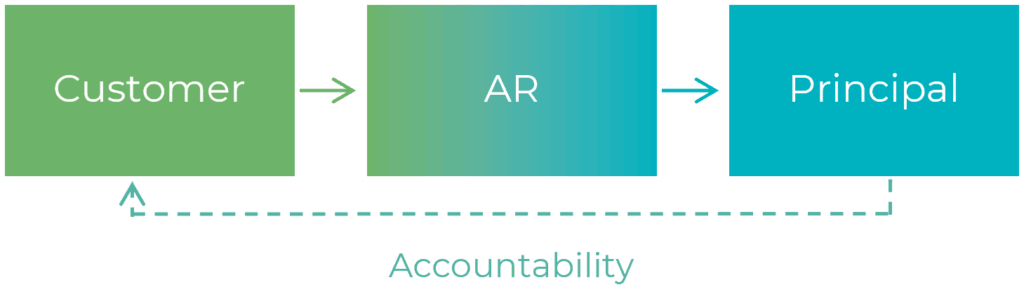
An AR is not directly authorised by the Financial Conduct Authority (FCA0. Instead, it carries on regulated activity under the permissions of its principal, which retains full regulatory responsibility for the AR’s conduct. That responsibility is absolute and non‑delegable. No contractual arrangement, policy allocation or reliance on AR attestations alters where regulatory accountability sits.
The FCA has recently reinforced this point in its work on inactive ARs[1], reiterating that responsibility for ARs rests firmly with the principal. The guidance makes clear that inactivity does not dilute accountability. Where AR activity is limited, or has ceased, this places greater importance on the principal’s ability to maintain an accurate, up‑to‑date understanding of its AR population.
The AR regime plays an important part in the provision of financial services allowing a broader range of providers to enter the market and therefore aligning to the Government’s and regulators’ objectives of promoting competition (and consumer choice), supporting innovation, and contributing to economic growth. From a firm’s perspective, using ARs allow extension of reach and cost efficiency. In 2024, ARs generated £11.1bn in regulated revenue from financial services.[2]
In recent years, the FCA has tightened the AR regime through the introduction of new rules[3] and has kept it top of mind as evidenced by the Government’s recent consultation[4] which identifies weaknesses in AR oversight as a key driver of consumer detriment. The FCA, through its supervisory work, considers risks to consumers higher where services are delivered through ARs than directly authorised firms, and it is focussed on strengthening principal firm oversight of ARs.
The scale of the AR model: Why the risk exposure is material
The AR population has grown significantly from the inception of the model in 1986 reaching approximately 34,000 active ARs in September 2025.[5]To put this into context, the latest figures show that the FCA supervises around 16,000 firms for AML (less than half the total AR population).[6] It falls squarely on the principal to ensure their ARs are adhering to AML requirements.
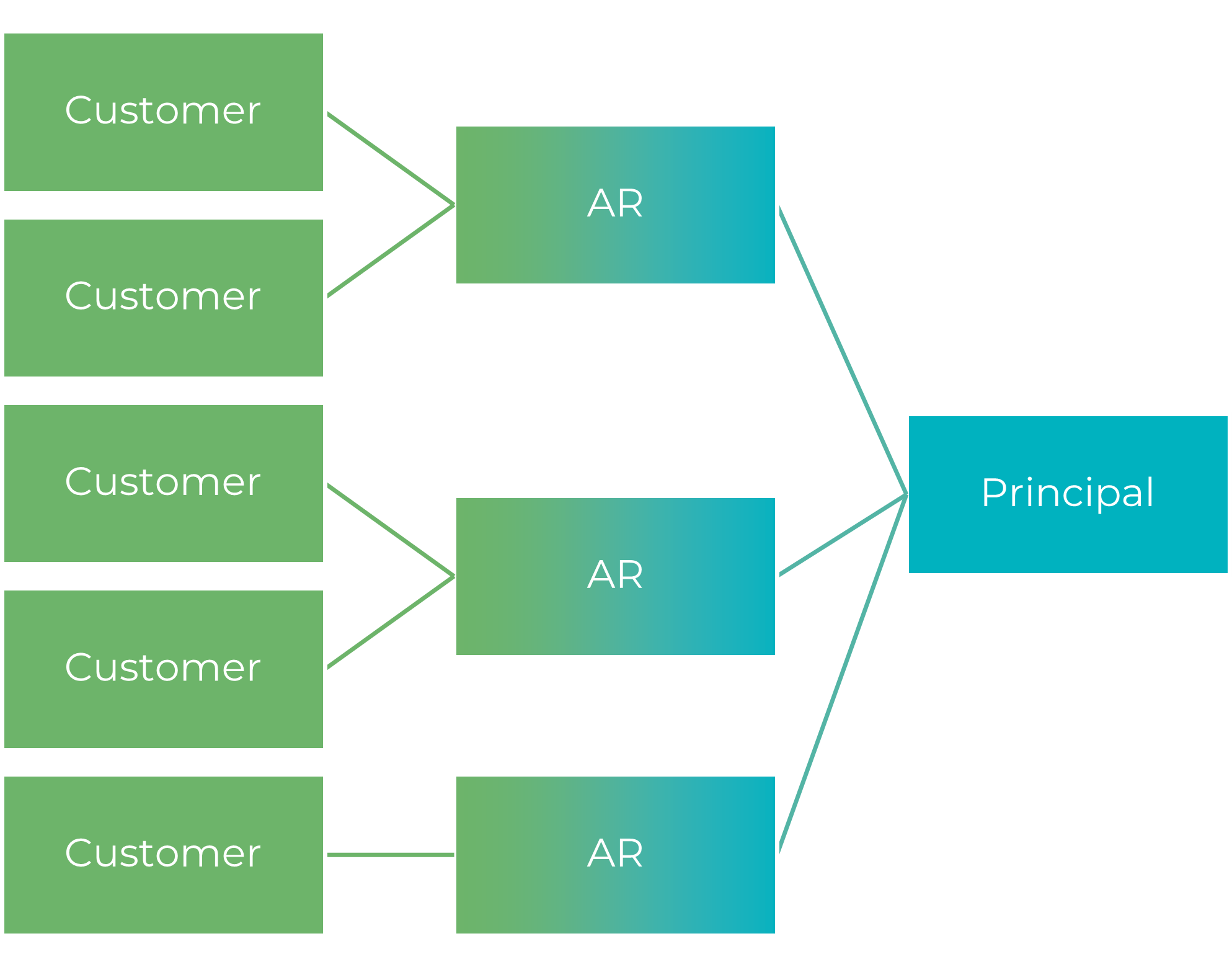
The FCA’s data shows that there were approximately 2,500 principals in September 2025; an average of 13 ARs to one principal. This concentration of responsibility means that a small number of principals act as regulatory choke points for large AR populations, materially increasing financial crime, governance, and operational risk.
Stress fractures beneath the surface
In practice, failures rarely stem from an absence of policies. They arise where principals cannot independently see or test how controls are executed at AR level.
Principal firms’ inherent risks increase through the use of ARs as the firm is one step removed from the customer and often rely on ARs to conduct key financial crime controls, such as client onboarding. The ARs themselves are not regulated, any failure by the ARs becomes the responsibility of the principal. Accountability cannot be transferred.
As shown above, the FCA data indicates, on average, that one principal can have many ARs. Unless the principal determines a minimum standard for controls execution, the potential variability in AR frameworks creates risks in oversight.
When the ice breaks: Common financial crime themes
The FCA’s findings on financial crime failures with corporate finance firms sheds some light into AR failures.[7] It found that 29% of principal firms assessed did not conduct financial crime risk assessments of their ARs, and 19% of principal firms did not assess the effectiveness of their own oversight and control mechanisms for AR financial crime risks.
The findings further revealed that some firms did not conduct on-site visits or other audits of their ARs, nor did they independently investigate the reports they receive from ARs concerning financial crime controls or incidents. This creates a blind reliance on AR self‑reporting and significantly increases the likelihood that financial crime issues remain undetected under the surface until triggered by regulatory intervention.
There is no reason to believe that the AR population would not exhibit the same AML failures as directly supervised firms, including inadequate customer due diligence, risk assessments and ongoing monitoring. In AR environments, these weaknesses can enable high‑risk introducer‑led business, inconsistent customer due diligence across ARs, delayed SAR escalation and increased sanctions exposure through overseas activity.
Testing the ice: What good looks like
The FCA is clear. Principal firms are accountable for their AR networks. They are expected to manage these networks responsibly and conduct higher standards of due diligence. Trusted relationships cannot replace objective due diligence. Firms must maintain rigorous, objective financial crime controls rather than relying on the length of a relationship, or personal trust as a justification for bypassing checks.
The FCA is focused on strengthening principal firm oversight of ARs to prevent harm to consumers and markets.[8]This should include:
Board‑level ownership of AR risk, including financial crime risk
Inclusion of the AR channel in business-wide risk assessments
Risk‑based AR segmentation driving differentiated oversight
Clear policies and procedures for managing financial crime risks introduced through ARs
Robust onboarding and pre‑appointment due diligence
Regular financial crime reviews, beyond box‑ticking, and not over relying on AR attestations
Consideration of the AR culture to identify risk factors that could increase financial crime risk such as volume-driven sales models, rapid growth without corresponding increase in controls, and weak compliance culture
Clear, enforced consequences for control failures
Stronger AR oversight is not about thicker rulebooks; it is about knowing, at any moment, where the ice is weakest.
ARs are a business choice. Financial crime risk is not optional
The FCA’s goal is to ensure that while the AR regime enables innovation and growth, it does not become a weak point that bad actors can exploit. The AR model is commercially attractive, but risk ownership remains firmly with the principal. When AR controls fail, it is the principal that falls through the ice, regardless of where the failure originated.
Those that treat AR oversight as a compliance formality are likely to be exposed. Those that embed robust, risk‑based supervision will be better placed with regulators and clients alike.
Innovation may skate ahead, but accountability stays where the ice breaks.
Priya Giuliani is a specialist in financial crime investigations & compliance with nearly 30 years’ experience, including a decade as a Partner. She specialises in helping clients on a proactive basis to assess and manage the risk of financial crime including assessing governance, oversight, conduct, and training Senior Managers and Boards. Her investigative experience provides insight in to how various financial crime types (e.g. money laundering, terrorist and proliferation financing, sanctions and tax evasion, bribery, corruption and fraud) can occur, including through the use of professional enablers, and the controls required to manage these risks effectively. Priya has been appointed on many Skilled Person engagements. Widely regarded as a well-qualified and highly experienced expert in financial crime risk management and investigations. She understands risk well and works with clients to assess and develop proportionate and effective control frameworks.
What makes a good claim? Ten principles for credible claims in construction and engineering
23rd April 2026
by Kirsteen Cacchioli
I have seen many claims over the years, some of which have been well prepared, but many of which have not. A good construction or engineering claim is built through disciplined thinking, robust evidence and a clear understanding of how contractual rights translate into recoverable entitlement, but this is very often not the case.
And in a world where technology prevails, and AI can generate (or hallucinate!) all manner of data and “insight”, as well as assisting with presentation, it’s important to remember that AI and technology alone cannot replace the judgement, structure and scrutiny required to prepare a credible and persuasive claim.
So what are the key ingredients of a good claim? The most effective claims share common characteristics: they are grounded in the contractual and legal framework, informed by those who lived the project, supported by contemporaneous records, and communicated through a clear, objective narrative. They apply consistent methodology, acknowledge weaknesses, focus on what truly matters from a recovery perspective, and have undergone challenge and refinement.
Ten principles for a strong construction claim
The ten principles set out below reflect these fundamentals. Taken together, they provide a practical framework for preparing claims that are not only technically sound, but also proportionate, defensible and ultimately more likely to succeed.
Know the contractual and legal matrix for your claim Understand what your rights and obligations are, where your entitlement might lie, and what you need to demonstrate in order to successfully pursue that entitlement. Prioritise this understanding from the outset and keep this as a key focal point throughout the preparation of the claim.
Lean into the project team A good claim relies on the contemporaneous experience and understanding of the team who were there at the time. “Boots on the ground” knowledge of the project, the context of the claim, and the critical detail is invaluable.
Gather your data Site diaries, photographs, drone footage, programmes, cost records, progress reports, WhatsApp chats, instructions, change orders… the list goes on! Know what information you have (and what you are missing). There remains no substitution for contemporaneous records to support a claim.
Develop a clear and coherent narrative Draft a strong and logically-structured narrative, and present it in a way which is easy to follow for someone who is unfamiliar with the project and the issues at hand. If a claim is difficult to read, hard to follow or requires too much effort to understand, the momentum behind the claim can be quickly lost. Take your reader with you and don’t assume a level of understanding which is not there – explain things clearly and provide plenty of signposting along the way.
Reference and present supporting documentation clearly Provide clear reference points to supporting documentation and ensure that documentation is easy to identify, access and navigate. If information is too hard to find, or too difficult to interpret or review, the strength of the claim is undermined regardless of its merits.
Ensure the claim remains objective and fact-based Avoid emotive language and sense check the submission. Having the claim stress-tested by a pair of “fresh eyes” can be invaluable. It is all too easy for a project team, or indeed the wider business, to become overly invested in a single version of events and to believe their own truth. Independent challenge can help guard against bias or oversight. Consider engaging specialists where appropriate, particularly if the claim is technical in nature or of particular magnitude or importance.
Be consistent in your approach and methodology Consistency is critical. Don’t cherry-pick data, or how you interpret and use that data. If different analyses tell different stories, or if there is credit to be accounted for, then acknowledge it. Disputes are rarely one sided, and being willing to acknowledge internal weaknesses and issues which may have contributed to the dispute is essential to the strength of a claim. Any inconsistencies will undoubtedly be identified by the opposing party if left unaddressed. It’s far better to be prepared ahead of time than to be caught on the back foot.
Consider all angles Be open minded to alternative approaches and strategies. There are often different ways of approaching the same issue, some of which may be more appropriate to the claim in question. A creative approach might be exactly what is required in certain circumstances – just because something worked a particular way before does not mean it is the best approach now. Past practice should inform decisions, but not dictate them. The most appropriate approach needs to be considered on a case-by-case basis for each individual claim and the outcome the business is looking to achieve.
Follow the money Very often, substantial amounts of time and effort can be wasted on issues that are weak contractually, or that simply will not result in meaningful cost (or time) recovery given the effort involved. Focus on the elements of the claim that matter – “keep your eyes on the prize”… “cash is king”… “show me the money”… All the old adages still apply! And finally…
Don’t underestimate the time and effort involved in preparing a claim Give yourself adequate time to gather the facts, address missing data, analyse the detail, and develop the submission. Then give yourself more time to question (or be questioned on) the claim, to address those questions properly, and to be prepared for opposing arguments. Preparing a claim is not a quick process – and if it is, the chances are it will probably fail…
Kirsteen Cacchioli has over 20 years’ experience supporting quantum experts on construction and engineering disputes. She has acted as lead assistant to the named expert across adjudication, arbitration and litigation, drafting expert reports, joint statements and Scott Schedules, and working closely with clients and legal teams. Kirsteen specialises in quantum expert support and the preparation and defence of claims and counterclaims, including contractual analysis, commercial reviews and cost assessment. Her experience spans major highways and hospital projects, cladding and pier remediation schemes, and complex commercial developments across Europe.
When red flags change meaning: Rethinking maritime sanctions risk in times of crisis
20th April 2026
by Noemi Klein
In conflict-affected shipping corridors, classic sanctions indicators can become ambiguous. The real challenge for trade finance specialists is no longer spotting anomalies, but interpreting what those red flags mean quickly, consistently, and defensibly distinguishing security-driven behaviour from illicit conduct.
In maritime trade finance, the challenge is no longer simply identifying red flags. It is determining what those red flags mean in a specific context. In peacetime, an Automatic Identification System (AIS) gap, an abrupt route deviation, clustering of vessels offshore, or an unusual anchorage departure may justifiably trigger suspicion of sanctions evasion. In conflict affected corridors, those same behaviours may instead reflect protection measures, specific naval instructions, known threat avoidance, or interference with navigation systems. The result is a tougher and more consequential control challenge: distinguishing deceptive conduct from security-driven behaviour without falling into the traps of false comfort or blanket de-risking.[1], [2]
That distinction matters acutely in the Gulf and Strait of Hormuz. Recent reporting from UK Maritime Trade Operations (UKMTO)[3]and the Joint Maritime Information Center (JMIC)[4] describes a maritime environment shaped by projectile incidents, critical threat assessments, vessel drifting, congestion at anchor, and electronic interference affecting navigation and AIS reliability. Industry reporting, such as Windward, has also highlighted a sharp rise in Global Navigation Satellite System (GNSS) and AIS disruption in and around the Gulf, with one March 2026 assessment citing more than 1,650 vessels affected by GPS and AIS interference, and multiple spoofing clusters across the region. In such conditions a control framework that treats every anomaly equally will over escalate some legitimate trade and miss the more subtle indicators of actual evasion.[5]
This does not mean classic maritime sanctions indicators have lost their relevance. The UK Office of Financial Sanctions Implementation (OFSI) continues to identify false flags, ship-to-ship (STS) transfers, irregular sailing patterns, complex ownership structures, false documentation, AIS disablement or spoofing, and altered vessel identifiers as common evasion practices. The U.S. Office of Foreign Assets Control’s (OFAC) maritime advisory likewise emphasises deceptive shipping practices such as AIS manipulation, false flagging, ownership opacity, and covert STS activity. The real shift is not in what constitutes a red flag, but the weight any single indicator should carry in conflict conditions, Vessel telemetry alone becomes less decisive, while the broader risk context, multi-source corroboration and documentary coherence become more important.
A classic, but useful comparison, is the age-old piracy risk off the coast of Somalia. Guidance connected to the International Maritime Organisation (“IMO”) principles and industry best practice has long recognised that if the master believes continued AIS operation could compromise the vessel’s safety or security, AIS may be switched off. At the same time, naval forces in some periods have preferred reduced or continued AIS transmission for monitoring through the Gulf of Aden.[6] MARAD’s 2025 advisory[7] also underlined that the piracy threat in the Gulf of Aden, Arabian Sea, and Indian Ocean remains real, including reported boardings, hijackings, and suspicious approaches far from the Somali coast. The lesson for compliance teams is simple: ‘going dark’ is not inherently illicit, but in times of conflict, it is not inherently benign either. The answer lies in the surrounding pattern.
Conflict vs peacetime: How the meaning of maritime indicators change
Indicator
Peacetime interpretation
Conflict -zone interpretation
Mitigation strategies
AIS dark zones / transmission gaps
Often a strong indicator of concealment, especially where combined with high-risk trade routes, STS history, or sanctioned geographies.
In the Gulf or other active threat corridors, AIS silence may reflect force protection or master discretion in response to a security threat; Somalia piracy guidance is the clearest comparator.
Master’s log entries, security advisories, UKMTO / Naval Cooperation and Guidance for Shipping (“NCGS”) reporting, company security instructions, and timing correlation with known threat windows.
False Iranian port calls / impossible positions
May indicate spoofing designed to disguise a sanctions nexus, destination, or origin.
In the Gulf conflict environment, false positions may instead reflect GNSS interference or AIS distortion; UKMTO and JMIC have warned of disruption affecting AIS and other systems.
Independent location cross-corroboration: satellite data, terminal logs, port agent confirmations, pilotage records, and timestamped bridge evidence.
AIS speed anomalies
In peacetime, implausible speeds can indicate manipulated AIS data or spoofing.
In the Gulf, UKMTO reported a marked increase in AIS speed anomalies around Bandar-e-Pars, the Strait of Hormuz, and wider regional waters during periods of GNSS disruption.
Ask whether the anomaly was isolated to one vessel or widespread across the area, and whether bridge teams recorded concurrent navigation interference.
Route deviations
May suggest positioning for covert STS activity, destination concealment, or sanctions evasion through indirect routing.
In conflict zones, route changes may reflect avoidance of strike zones, exclusion areas, military activity, or insurer or operator rerouting decisions.
Voyage instructions, rerouting notices, charter party instructions, insurer guidance, and evidence of regional threat alerts at the time of deviation.
Convoy clustering / mass concentration of vessels
In peacetime, close clustering may suggest coordination between illicit actors or pre-positioning for transfer activity.
In the Gulf conflict, clustering may instead be produced by electronic interference, anchorage congestion, blockades, security holding patterns, or ships waiting for safer transit windows.
Distinguish networked behaviour from shared disruption: compare counterparty linkages, cargo alignment, and whether unrelated vessels were similarly affected.
Abrupt anchorage departure
May suggest concealment behaviour, hurried STS positioning, or efforts to avoid scrutiny.
In conflict zones, departure from anchorage may reflect immediate reaction to nearby incidents, strike risk, or port security instructions.
Port authority notices, VTS instructions, security alerts, insurer or operator instructions, and chronology of nearby incidents.
Drifting / loitering
In peacetime, prolonged drifting can suggest a vessel waiting for covert contact, informal transfer, or evasive routing.
In a conflict setting, drifting may be a defensive posture while awaiting clearance, convoy coordination, or safe passage through a high-threat zone.
Determine whether drifting coincided with traffic freezes, military advisories, or regional attack warnings.
STS transfers
While STS activity remains a classic sanctions evasion indicator, particularly when conducted at night, in high‑risk waters, or involving opaque counterparties, it must be assessed in context, as STS operations are also a routine and legitimate feature of certain trades, geographies, and established mother/daughter vessel arrangements.
Times of conflict do not neutralise the risk of illicit STS transfers. If anything, conflict can provide cover for deceptive transfers, particularly where AIS reliability is already degraded.
Require full STS transfer records, counterpart vessel history, fendering or support data, cargo reconciliation, and six-month AIS and ownership review on both vessels.
Port closure / navigation suspension
In peacetime, unexpected cessation of movement around a port may sometimes suggest evasive behaviour or unexplained operational anomaly.
In the Gulf, navigation restrictions may reflect genuine safety concerns. Qatar temporarily suspended maritime navigation in October 2025 citing GPS malfunction affecting navigation accuracy.[8]
Seek official notices, port circulars, operator alerts, terminal instructions, and evidence that the vessel’s behaviour matched broader port-wide restrictions.
Bunkering disruption / force majeure
In peacetime, sudden changes in bunkering location or supply route may warrant review but are not automatically suspicious.
In the Iran linked Gulf crisis, disruptions to bunkering hubs such as Fujairah were reported alongside security incidents, suspended deliveries, force majeure declarations, and sharply reduced barge activity.[9]
Validate with supplier notices, bunker confirmations, revised port calls, price spikes, and contemporaneous operational alerts rather than inferring illicit motive from change alone.
War-risk insurance withdrawal / coverage shock
In peacetime, inability to secure normal insurance may raise questions about counterparties, voyage legitimacy, or asset risk.[10]
In conflict conditions, loss or repricing of cover can itself drive routing changes, delays, anchorage concentration, or selective transit behaviour.
Ask for broker correspondence, war-risk endorsements, premium changes, and whether behaviour changed immediately following insurer decisions.
Rapid ownership / manager rotation
A classic sanctions-evasion signal, particularly where multiple shell entities or frequent International Safety Management (“ISM”) company or manager changes are involved.
Unlike some movement indicators, this remains suspicious in both peacetime and at times of conflict. Conflict does not provide a natural operational rationale for serial beneficial ownership or manager opacity.
Enhanced beneficial ownership review, corporate registry checks, historical manager trace, and screening of linked entities and associated vessels.
False or inconsistent cargo documentation
Always a major indicator: mismatched bills of lading, origin inconsistencies, altered certificates, or pricing anomalies are central evasion tools.
In high interference conflict conditions, documentation often becomes more, not less, probative than vessel movement alone. When telemetry is noisy, paperwork coherence becomes the tie breaker.
Require inspection certificates, quantity or quality reports, market pricing checks, dual review of origin documents, and linkage between trade paperwork and observed physical movement.
Physically altered vessel identifiers
A strong evasion indicator in peacetime and a classic attempt to obscure vessel identity.
This remains highly suspicious even during conflict. Conflict may explain movement anomalies; it does not explain painted-over IMO numbers or disguised hull markings.
Independent vessel imagery, historical registry records, port inspection findings, and cross-platform identifier matching.
Why this matters for trade finance teams
The practical implications are that conflicts should change both the assessment and escalation logic, not lower the standard of scrutiny. Banks should not ignore AIS gaps, route changes, loitering, or unusual port behaviour simply because of conflict. But, nor should it treat those indicators as self-proving.
In conflict-affected routes some of the traditional movement-based signals become less diagnostic on their own, while ownership opacity, document inconsistency, implausible commodity economics, and multi-signal patterning become more important. The point is not that institutions need more alerts, but better judgement. They need to move beyond red flag detection alone and build the capability to make disciplined, defensible decisions under pressure, grounded in sanctions expertise, operational context, investigative rigour, and control frameworks that can withstand the realities of human performance in crisis conditions.
[3] UKMTO Recent Incidents– recent incidents page documents attacks and suspicious activity affecting vessels in and around the Arabian Gulf, Strait of Hormuz and Gulf of Oman in 2026.
[4]JMIC Advisories – 2026– March 2026 advisory update described a critical threat environment, drifting vessels, anchorage congestion and interference including EMI, AIS spoofing and jamming.
[5]Windward, GPS Jamming Surges in the Middle East Gulf, 1,650 Ships Hit, 8 March 2026
[6]IMO MSC.1/Circ.1339: Piracy and armed robbery against ships in waters off the coast of Somalia
Best Management Practices for Protection against Somalia Based Piracy, 14 September 2011 Microsoft Word – 1339.doc
Noémi Klein has over ten years’ experience in financial crime investigations and compliance. She advises organisations on anti‑money laundering, fraud prevention, and anti‑bribery and corruption, supporting senior leadership, boards, counsel, and regulators.
She has particular expertise in sanctions advisory, high‑risk client portfolio management, trade finance and supply chain risk, and regulatory‑driven remediation programmes, including work under the FCA’s Skilled Person framework. Noémi has held both consulting and senior in‑house roles at global banks across Europe, the Middle East, Asia, and Africa.
Sovereign immunity: Four observations from the investigative perspective
15th April 2026
“From an investigative standpoint, sovereign immunity is not always a binary question. Rather, it may be gradually contextualised.”
Sovereign immunity is a legal doctrine that protects states and their assets from being sued or subjected to enforcement in foreign courts. Yet it is also regularly encountered terrain within the investigative domain.
For investigators, sovereign immunity is not a single question to be answered, but a condition that shapes how information is gathered, assessed and interpreted over time. Facts emerge unevenly, behaviour matters as much as formal structure, and certainty is rarely available at the outset. Within this context, investigators develop ways of working that sit alongside, but are distinct from, legal analysis. Set out below are four observations drawn from that investigative standpoint.
Observation 1: Sovereign immunity as a spectrum, not a status
From an investigative perspective, sovereign immunity may be considered as a structural factor that shapes how an asset can be assessed and which avenues of analysis are viable. A good illustration of this is the long‑running Crystallex v. Venezuela enforcement proceedings, where the assessment of an asset’s immunity relied on analysing its practical function rather than its legal description.
In that case, Crystallex sought to enforce a USD 1.2bn arbitral award against the state of Venezuela by attaching shares of PDV Holding (“PDVH”), a US-registered subsidiary of PDVSA, Venezuela’s state‑owned oil company and owner of US-registered CITGO Petroleum Corporation (“CITGO”).Although the shares were nominally owned by PDVSA, CITGO was one of Venezuela’s most valuable foreign assets, making the structure PDVSA → PDVH → CITGO central to assessing what could realistically be reached through enforcement proceedings.[1]
At the investigative stage, immunity is rarely treated as a clear yes or no question, and assets are not simply categorised as immune or non‑immune. Instead, they are assessed along a spectrum of exposure, informed by a elements including operational context, ownership history, and how they have been involved in transactions. Crystallex v. Venezuela illustrates this point: although PDVSA is formally a separate juridical entity, the courts’ reasoning suggests that they examined information pertaining to how PDVSA operated within the Venezuelan state apparatus. Publicly available judgments refer to governance, state direction, financial dependency and the practical role PDVSA played in implementing government policy.[2] The US District Court for Delaware found PDVSA to be Venezuela’s alter ego, a conclusion later affirmed by the Third Circuit.
This shift, from presumptive immunity to attachability, reflects an approach that treats exposure as a spectrum and suggests that the available evidence was capable of supporting a different characterisation of PDVSA. This also illustrates how modern states increasingly pursue their interests through companies and commercial arrangements, rather than through traditional forms of government activity.
Investigators tend to treat immunity claims as provisional, capable of being narrowed or refined as further facts emerge. Much of the information relevant to these assessments can be found outside formal litigation channels. In Crystallex v. Venezuela, the court did not outline its fact‑gathering, but publicly available filings suggest that it had access to corporate documents, financial disclosures, bond prospectuses, and information on dividend flows, asset pledges, and PDVSA’s conduct within the PDVH/CITGO structure. Such commercially derived material can often shed more light on an asset’s actual function as opposed to sovereign assertions alone.
This broader way of looking at sovereign immunity also helps explain why outcomes in sovereign enforcement can be less predictable than their private‑sector equivalents. The legal doctrine sets the framework, but its application often turns on factual patterns that are complex, incomplete, or disputed. Investigators operate within this space, assembling the facts that give the doctrine practical meaning and revealing where an asset’s real‑world use may diverge from its formal classification. The investigator’s role is not to determine whether immunity applies, but to develop the factual foundation on which that legal assessment rests.
Observation 2: Alter ego as a question of behaviour over time
Number Analytics describes the doctrine of alter ego as a legal theory that allows a court or tribunal to disregard the separate legal personality of a corporation and hold its shareholders or affiliated entities liable for its actions.[3] From an investigative perspective, alter ego is less a fixed status and more a pattern of behaviour that develops over time. In some cases, this behaviour only becomes apparent through extended observation, for example when examining how decisions are made, how assets are deployed, or how financial flows consistently track state direction.
Entities linked to sovereign states may operate with a high degree of independence during periods of political stability or favourable market conditions but move into closer alignment with state priorities when circumstances shift. Investigative work therefore looks beyond formal governance structures and focuses on how those arrangements function in practice, particularly when they come under pressure. Boards may appear independent on paper but be made up of individuals whose positions depend on political support in practice. Management teams may have freedom in day to day commercial decisions, yet defer completely to the state on matters of strategic importance. Financial links can add further complexity, particularly through state guarantees, subsidies or capital injections are used to support or steer an entity’s activities.
None of these factors, taken on their own, necessarily defeat separateness. Taken together, however, they can weaken it in ways that are not obvious from corporate records alone.
Investigators also look closely at how decisions are made, including through informal channels. In entities linked to sovereign states, significant decisions may rely on consultation or clearance processes that leave little documentary trace, but the absence of written instructions does not mean that influence is absent. This creates evidential challenges, as influence that is well understood internally may remain largely invisible to outsiders. As a result, alter ego analysis from an investigative perspective may become a matter of probability rather than certainty, supported by repeated behavioural patterns rather than definitive proof of control.
Over time, these behavioural signals can build into a picture of conditional dependence. An entity may not function as a direct arm of the state in all matters, yet its autonomy may narrow at moments of pressure in ways that warrant closer scrutiny. Investigators do not decide whether this dependence meets the legal threshold for alter ego; instead, they identify where formal separation appears most vulnerable. In doing so, they provide factual depth often missing from more conceptual discussions of sovereign corporate autonomy.
Observation 3: Commercial use as a functional, not categorical, concept
Commercial use is often discussed as if it were an inherent feature of an asset, capable of being identified by classification alone. However, this approach does not always apply.
In fact, assets rarely declare themselves as commercial. Instead, their character becomes clear through how they are used, who they deal with, and the practical motives driving their activity. For this reason, investigators tend to focus on function rather than form, looking at the role an asset plays within wider financial and operational arrangements.
In ConocoPhillips v. Venezuela, ConocoPhillips sought to enforce an USD 8.5bn arbitral award and turned to US-based assets linked to PDVSA. Although PDVSA formally qualified as a sovereign instrumentality, the publicly available decisions suggest that the courts considered how it behaved in practice (its commercial dealings, revenue‑generating operations, and the way it deployed and controlled subsidiaries abroad) to determine whether the assets were being used commercially.[4] As discussed above, these behavioural indicators appear to have contributed to the conclusion that PDVSA functioned as Venezuela’s alter ego for enforcement purposes, rather than relying solely on its legal status.
In practice, this involves close scrutiny of transactional behaviour. Regular dealings with private counterparties and sustained revenue‑generating activity strongly indicate commercial use, whatever the asset’s formal description. Pricing, contract terms, and risk allocation often reveal more about its true purpose than ownership or stated mandate. Commerciality is therefore usually understood as something demonstrated over time, through consistent and repeated conduct, rather than proved by a single transaction.
Importantly, disputes over commercial use often arise not because such use is absent, but because its importance is contested. From an investigative perspective, that distinction matters. An asset that engages in commercial activity on an occasional basis looks very different from one that operates much like a private company. By placing this behaviour along a chronological spectrum, investigators can build a more nuanced view of exposure without drawing hard lines. This reflects the broader reality of sovereign disputes, where outcomes can depend on small factual differences rather than neat categories.
Observation 4: Mixed-used assets and the practical limits of sovereign asset tracing
Some sovereign assets occupy a grey area between public policy functions and commercial activity. In such cases, the investigative task is not to remove the ambiguity, but to map it: assessing how often the asset engages in commercial dealings, how significant that activity is compared with any public function, and whether that balance shifts over time, especially around moments of dispute or enforcement risk. Attempts to label such assets as purely sovereign or purely commercial overlook how these roles interact in practice.
Tracing mixed-use assets requires a level of detail that is not always possible given limits of time, jurisdiction, or access to information. Financial flows may be commingled, governance structures may be layered, and decision-making may be spread across several entities and jurisdictions. Separating these elements to isolate commercial activity can be time consuming and may not always produce clear results. Investigators therefore have to strike a balance between seeking precision and recognising when further analysis would rely too heavily on assumption. This judgement is rarely visible in the legal record, but it has a significant influence on the scope and depth of investigative work.
There are also practical limits that arise from the way sovereign systems function. Officials may take decisions informally, records can disappear quickly or never be created, and corporate structures may shift at short notice in response to perceived risk. Jurisdictional complexity compounds these challenges, especially when assets sit in places that discourage scrutiny. Even when investigators obtain information, it may arrive too late to capture the asset’s position at the point in time that matters. These constraints do not diminish the value of asset tracing, but they do define the boundaries of what investigators can realistically achieve.
Recognising these limits is an important part of a credible investigative approach. It shows that a lack of firm conclusions does not mean the facts are missing but may reflect structural or temporal constraints. Mixed‑use assets often produce findings that fall along a range of exposure rather than clear yes‑or‑no answers. Investigators work within this partial clarity, providing useful factual insight even if it cannot be complete. In the sovereign context, this kind of qualified understanding is a highly relevant and practical contributions asset tracing can offer.
Concluding observation
Across all four observations, a common theme emerges: sovereign immunity takes practical meaning not from doctrine alone, but from facts that develop unevenly and resist neat categorisation. Investigators operate in this space of qualified certainty, assembling the substance that allows legal analysis to function. In sovereign enforcement, this contextual understanding is not peripheral, it is essential.
[2] https://www.courtlistener.com/docket/6169439/crystallex-international-corporation-v-bolivarian-republic-of-venezuela/, and https://law.justia.com/cases/federal/appellate-courts/ca3/18-2797/18-2797-2019-07-29.html
Fiona Harmsen is an investigator specialising in global complex investigations and cross‑border evidence gathering. She has helped law firms, in‑house teams, and award holders turn incomplete datasets into actionable insight, most often where assets, people, and jurisdictions intersect.
Her work provided critical intelligence and evidence to inform legal strategy and enforcement measures. Her expertise includes identifying leverage points to facilitate settlement, identifying and supporting the recovery of assets, and developing strategies to overcome challenges such as sovereign immunity and alter ego arguments. She has successfully evidenced ownership and control of state assets, and contributed to lobbying and communications strategies to strengthen enforcement efforts. Fiona has worked on disputes in sectors such as logistics, mining, construction, energy, and telecommunications.
Embedded Finance: Growth Engine, Consumer Win, and the Next Frontier for Financial Crime Risk
9th April 2026
Embedded finance has evolved from an early fintech innovation into a mainstream commercial strategy reshaping how consumers and businesses access financial services. Whether it is buy-now-pay-later at checkout, insurance embedded into e‑commerce, or small and medium enterprises (SMEs) accessing credit through their accounting software, financial services increasingly appear at the point of need. This has improved customer experience, opened new revenue streams for brands, and contributed to economic growth. Yet behind the opportunity sits a complex set of financial crime risks that firms can no longer afford to underestimate.
The Opportunity
Research shows that embedded finance is expected to more than double in size by 2029, with almost half of large UK corporates viewing it as a strategic growth driver[1]. Consumer expectations for instant payments, simplified credit and integrated insurance have set a new baseline for digital experiences.
The Euro Banking Association[2] describes the growth potential as ‘immense’, recognising that significant market volume is shifting away from traditional distribution channels towards embedded models. This shift has meaningful implications for the wider economy. It is particularly important for SMEs, many of whom struggle to obtain affordable working capital[3]. Embedded finance partnerships are helping to bridge this gap enabling faster access to funds and supporting small-business resilience. Consumers also benefit through smoother journeys, competitive pricing and friction-free access to financial services integrated into daily life, from retail and travel to mobility and healthcare.
But as embedded finance accelerates economic participation and consumer access, the regulatory and financial crime environment around it is becoming more complex.
The Intermediation Layer
Embedded finance operates through a multi‑layered value chain:
The customer belongs and interacts with the brand, often unaware of the regulated entity at the end of the chain.
The brand (retailer, marketplace, app) is responsible for the customer relationship, experience, journey, user interface, data capture and other touchpoints. Think of it as the first line of defence, the only difference is that it is often unregulated for financial services and money laundering obligations which can be a vulnerability.
The embedded finance platform is the technology enabler, it provides the technology, APIs, orchestration and onboarding flows. It may or may not be regulated.
The regulated financial institution (FI) (Bank or electronic money institution (EMI)) provides the underlying financial product and carries full regulatory and anti-money laundering (AML) accountability.
This structure means the customer belongs to the brand, but the risk belongs to the Bank.
Financial institutions (FI) are one or two steps removed from the underlying customer, onboarding and often blind to the full customer context. They must rely on brands and platforms to perform key controls to mitigate risk. This introduces a form of “intermediated accountability” similar to correspondent banking, but with an added challenge: unlike respondent banks, brands in embedded finance are often outside the regulatory perimeter and do not necessarily have longstanding relationships with their customers.
Some describe this model as ‘renting a bank licence’. Regulators, whilst under pressure to promote the growth agenda, must consider what the consequences would be if one link in the chain fails, remembering that one FI can have multiple brands embedding its product.
The 2025 National Risk Assessment (NRA) identifies fintech driven models, EMIs, and AI‑enabled onboarding as emerging high‑risk channels because innovation is outpacing supervision and governance frameworks needed to ensure safe growth. From a regulatory perspective, embedded finance amplifies risks and control gaps across several dimensions:
Speed Driven Customer Journeys
Rapid onboarding, embedded checkout and instant credit decisions increase the likelihood that identity anomalies or fraud indicators are missed. Criminals exploit real time approval pressure.
Fragmented & Distributed Data
Customer data passes through multiple layers: captured by the brand, processed by the platform and relied upon by the FI. Each handoff creates vulnerability if information is incomplete or inconsistent. This also creates challenges with evidencing end-to-end audit trails within timeframes acceptable to regulators.
Misaligned Incentives
Brands optimise for conversion, platforms optimise for speed and scalability whilst FIs bear the regulatory exposure. Criminals seek out misaligned pressure points and varying standards in information security and data privacy standards.
Outsourcing Chains
Where customer due diligence (CDD) or onboarding checks are outsourced or even sub‑outsourced, ownership is often unclear, oversight becomes difficult and critical controls can fall through gaps.
EMI & Virtual Account Structures
The NRA highlights the use of virtual IBANs and EMI‑issued accounts as known vulnerabilities due to weaker UBO verification. When these sit within embedded finance arrangements, they can facilitate layering and obfuscation of illicit funds.
Strengthening Resilience
Despite these risks, embedded finance offers FIs a unique advantage: the ability to develop a single view of a customer across all brands on a platform, enabling better detection of unusual patterns spanning multiple journeys.
To preserve the benefits of embedded finance and meet regulatory expectations, the industry must adopt a network‑defence mindset, recognising that AML risk is shared, but accountability is not.
For Regulated Financial Institutions
Treat embedded finance oversight as equivalent to correspondent banking relationships due to the reliance placed on the (unregulated) brand.
Conduct rigorous assessments of the brand and platform’s controls before onboarding and continuously thereafter for any lapses in standards or changes required as the regulatory requirements change.
Monitor any sub‑outsourcing chains including CDD providers and onboarding vendors.
For Brands
Understand the customer journey is a critical part of the regulated FI’s AML framework, not just a conversion pipeline.
Invest in AML awareness training, even where the brand is unregulated.
For Embedded Finance Platforms
Build control aligned architecture, including strong identity verification, secure data routing, and auditable onboarding logic.
Provide FIs with better transparency into customer journeys and risk signals.
Ensure consistent standards across all brands integrated through the platform.
Growth and Risk Managed in Parallel
Embedded finance is a powerful engine for economic growth, competition, and consumer benefit.
However, the model also introduces distributed operational structures, intermediated relationships, and complex accountability chains that criminals are already exploiting.
For embedded finance to deliver on its enormous potential, regulated FIs offering this product, must recognise that they are effectively becoming mini‑regulators within these ecosystems. Only by strengthening oversight, enhancing cooperation, and aligning incentives across the chain can the industry maintain trust while continuing to innovate.
How HKA can Help
HKA helps brands, embedded finance platforms and regulated FIs to collectively meet UK regulatory financial crime obligations and individually ensure they are meeting their contractual obligations.
For FIs: we carry out independent assurance and build robust oversight programmes.
For brands: we provide targeted coaching, training, assurance and framework development including for those that are less familiar with the regulatory and FI framework and expectations.
For embedded finance platforms: we assess and/or remediate the control framework to ensure the data received by the FI meets the right standards.
Priya Giuliani is a specialist in financial crime investigations & compliance with nearly 30 years’ experience, including a decade as a Partner. She specialises in helping clients on a proactive basis to assess and manage the risk of financial crime including assessing governance, oversight, conduct, and training Senior Managers and Boards. Her investigative experience provides insight in to how various financial crime types (e.g. money laundering, terrorist and proliferation financing, sanctions and tax evasion, bribery, corruption and fraud) can occur, including through the use of professional enablers, and the controls required to manage these risks effectively. Priya has been appointed on many Skilled Person engagements. Widely regarded as a well-qualified and highly experienced expert in financial crime risk management and investigations. She understands risk well and works with clients to assess and develop proportionate and effective control frameworks.
Noémi Klein has over ten years’ experience in financial crime investigations and compliance. She advises organisations on anti‑money laundering, fraud prevention, and anti‑bribery and corruption, supporting senior leadership, boards, counsel, and regulators.
She has particular expertise in sanctions advisory, high‑risk client portfolio management, trade finance and supply chain risk, and regulatory‑driven remediation programmes, including work under the FCA’s Skilled Person framework. Noémi has held both consulting and senior in‑house roles at global banks across Europe, the Middle East, Asia, and Africa.
HKA’s Magdalena Prus and Sarah Keyte consider information management tools which help support the Golden Thread requirements, their benefits, and the typical flaws in dispute resolution which prevent these tools from reaching their potential.
THE BUILDING Safety Act 2022 (BSA) prompted a transformative shift in the approach to building safety in England and Wales, driven by lessons from the Grenfell tragedy. It introduces new responsibilities and oversight mechanisms, and promotes a cultural shift toward greater accountability and transparency, to ensure building design and construction comply with safety regulations, particularly around fire safety.
Central to the reforms introduced by the BSA, and the secondary legislation, is the ‘Golden Thread’, a structured, digital record of safety-critical information produced during the design and construction of a building and maintained throughout a building’s lifecycle. While the Golden Thread is often discussed in terms of regulatory compliance, its real significance increasingly lies in how digital records frame accountability and evidence in future disputes. In other words, the Golden Thread ensures that accurate, accessible, and up-to-date safety information is available to all stakeholders – from designers and contractors to building owners and regulators. It also supports accountability (who did what, when and how), transparency (ensuring that safety decisions are based on reliable data), and continuity (that is, preservation of knowledge during ownership changes and building phases).¹ Generally speaking, the Golden Thread is critical for making informed decisions relating to fire safety throughout a building’s life cycle.
This article discusses common data environments and information management tools marketed as aiding Golden Thread compliance.
Common data environments
ISO 19650-1 defines a common data environment (CDE) as the “agreed source of information for any given project or asset, for collecting, managing and disseminating each information container through a managed process”.² In simple terms, project stakeholders use CDEs to share, store, and manage project information. CDE guidance is available for free on the UK BIM Framework website.³ CDEs are now mandatory in public sector projects and increasingly recognised as a cornerstone of good information management.⁴
Section 88 of the BSA introduces the requirement to keep and update the relevant information about Higher-Risk Buildings (HRBs), but it does not specify the format or any particular technology that must be used to comply with the Golden Thread. The secondary legislation provides further guidance on how to prepare or structure the Golden Thread.⁵ In summary, the information needs to be digital, accessible and easily transferable, accurate and up-to-date, secure, intelligible to the intended users, and consistent in language, terminology, and definitions.
Benefits of CDEs to projects
CDEs are typically intended to act as a single source of truth for project information. At its most basic, a well organised CDE makes it easier to find key information. This is beneficial to all parties. CDEs can ensure project stakeholders are working from the appropriate revisions of drawings, models, schedules, and documents. This is typically done using cloud-based platforms, allowing parties to collaborate remotely.
CDEs can help promote accountability. Defined workflows can make it obvious who owns each document, approval, or revision. As a result of improvements in data analytics, CDEs (and the dashboards they can host) can provide insights into critical activities and help identify potential risks. A dashboard may highlight overdue Requests for Information (RFIs) to the user responsible for responding to them.
It is difficult to quantify the return on investment for CDE implementation. A 2021 KPMG report suggested that for every £1 invested in information management, between £5.10 and £6 of direct labour productivity gains could be made.⁶ However, in our experience, when setup and managed well, a well-organised CDE can help project stakeholders manage information and work efficiently. This prevents re-works, which is beneficial to all project stakeholders.
In addition to document management, some CDEs are capable of hosting models, aiding clash detection and coordination efforts.⁷ This can help democratise Building Information Modelling (BIM), by allowing the wider project team to work collaboratively without the need for proprietary software.
Benefits of CDEs during dispute resolution
Under the Civil Procedure Rules Part 35 (CPR Part 35), an expert’s overriding duty is to give the court an independent opinion on matters within his/her area of expertise. Expert witnesses do not have first-hand experience of the projects they give opinions on. A well-managed,detailed CDE can give insights into who did what, when, (and sometimes how and why). In our experience, this can give useful, factual, contemporaneous evidence, which is preferable to conjecture.
In fire engineering disputes, expert witnesses may use CDE records to understand how the design evolved over ime and verify claims made by parties. For example, CDE records may show: when files were uploaded; authors; download logs; workflows; comments; and approvals or rejections. This enables construction of clear timelines and can aid understanding of the project, including the decision-making process relating to fire safety aspects of the project.
When asking HKA experts about their experiences working with CDEs, the largest CDE issued to our team housed over one million files. These were related to a major citywide infrastructure project. Files had been produced over a ten year period by more than thirty designers, consultants, contractors, and subcontractors. Documents could be searched by discipline, date, status, document number (all of which followed consistent naming conventions), description, or content.
Figure 1: Example of what a CDE looks like. An audit log of files can typically be exported from CDEs.
Many popular CDE solutions mention the Golden Thread in their product marketing (e.g. Autodesk construction Cloud⁸, Asite⁹, and Zutec10, to name a few). As shown in Figure 1, records from the CDE platform can often be extracted into excel.
Many CDEs have useful audit trail functionality. Aconex, a popular CDE, describes how “the Aconex audit trail records the changes made to documents, mail and reports in Aconex. It lets you see who was responsible for which decisions”.¹¹
CDE records may be used by experts to check whether the data trail in the CDE aligns with claims. These records may be used to visualise a timeline of when each party shared do cuments, and what the approval timeline looked like. This can give a holistic view of the project design and can aid the court/tribunal in better understanding of the project. CDE event log records can also be used for more granular purposes. For example, event logs may be used to track who viewed, edited, or downloaded a particular document and when.¹²
This data trail makes it easier, for example, to demonstrate that a party was or was not aware, or should have been aware, of key facts or documents at some particular point in time.
A poorly managed CDE can also be useful in dispute resolution, especially if standard of care or breach of contract claims relate to information management.
What can go wrong with CDE records?
There is a significant disparity in the quality of records we uncover during our forensic investigations. However, most failures are not technological, they are contractual, behavioural, or governance-related.
Choice and management of CDE: Not all records are created equally – and the same applies to the various CDEs available on the market, as well as the quality‑control procedures governing them. In our experience, some CDEs have a better audit trail functionality than others, so choice of CDE impacts quality of records. For example, one CDE solution analysed in our research did not support the extraction of detailed records.
Writing in the sand: Not all records are permanent – a party may have used a CDE during the project, but may not have downloaded records from it. While this can be rectified if the CDE is still functional, a CDE may be shut down after project completion. Records can be lost, or difficult to recover. At the outset of the project, it is arguably prudent to agree who controls the CDE, who will have access to it in future, and in what circumstances as part of the contract documents. However, this often is not the case.
Contractual uncertainty: Construction contracts often do not specify what happens to a party’s CDE access in the event of a dispute. While clause 5.5 of the ISO 19650 protocol¹³ states that the noncontrolling party will have “…reasonable access to the information in the CDE Solution and workflow…insofar as necessary to perform its obligations…”, this language is open to interpretation.
The party who controls the CDE can be a powerful gatekeeper. CDE access may be rescinded by the CDE controller if a dispute arises. Akin to the scenario in Trant Engineering Ltd v. Mott MacDonald Ltd [2017] EWHC 2061 (TCC), where a client sought an injunction to gain access to the CDE, access for non-controlling parties can be uncertain and potentially unstable.
This issue can be frustrating in disputes, as one team of experts may have access to the CDE, and the opposing experts may be forced to work without it. Having been on both sides of this issue, it is typically preferable to have CDE access.
Digital skills gaps: Similarly, many construction lawyers remain unaware of the benefits CDE records can have in dispute resolution. Without improvements to digital understanding, lawyers may not appreciate the importance of advising clients to preserve CDE records.
However, having observed a lawyer successfully navigate the employer’s CDE and BIM models to substantiate claims, it is evident that those who invest in developing these skills may present more compelling arguments, particularly as digital transformation continues to expand the range of available evidence.
Permissions vary: Depending on who controls the CDE (usually a client or a contractor), permissions of other parties (e.g. subcontractors) may vary. A as a main contractor. This may leave a subcontractor in a less advantageous position when pursuing claims. This raises a question whether the model should be under the ‘ownership’ of the project rather than an individual party.
Importance of backups: It is prudent for each project stakeholder to download records from the CDE and ensure copies of documentation uploaded to the CDE are backed up to an accessible domain under its own control. This gives each business control if relations break down. While this safety measure increases the cost of data storage, they are often negligible in relation to the cost of legal fees.
Figure 2: Asite Cognitive CDE AI function (Source: Asite)¹⁵
How might these tools improve in the future?
As artificial intelligence tools continue to be integrated into CDEs, some service providers are bringing Large Language Models (LLMs) into their platforms. For example, in May 2025, Asite announced their “Cognitive CDE”.¹⁴ As shown in Figure 2, among other functions, this tool answers users’ questions using project data and attempts to identify relevant documents. This is arguably a significant step towards making project information more accessible, particularly on complex projects with extensive documentation.
In practice, the potential value of such tools becomes clear when considering the types of searches that can be undertaken. In fire engineering related disputes, the searches would include drawings, specifications, designdecision records, change control procedures, review and approval logs, inspections records and on-site reports highlighting quality issues, clashes, etc. These are the types of information that parties currently obtain through e-discovery platforms, usually after additional steps of exporting, downloading, and re-uploading data. An LLM embedded within the CDE could in principle perform similar tasks, reducing this administrative burden and, maybe in the future, enabling targeted questions such as: “Who approved the compartmentation details and when?”.
While a discussion on LLMs in expert evidence is a topic worthy of its own article, LLM outputs will still require careful validation before they can be relied upon in an expert’s analysis.
Due to the delay between technology adoption during construction and the time typically taken for claims to arise, it may be some time before experts are given access to a CDE with integrated AI tools. However, in the context of Golden Thread compliance, such tools can help the project team to quickly locate safety-critical information across a large volume of design, construction, and maintenance records. By enabling accurate and transparent retrieval of project information, LLMs may help strengthen the continuity and accessibility of information required by the BSA.
Conclusion
CDEs are transforming how the construction industry manages and preserves project information, including the installation of fire safety elements and data trails relating to fire safety design.
When implemented correctly, CDEs can support Golden Thread compliance by producing accurate and accessible records. They not only enhance accountability and transparency in the context of the BSA, but also provide great evidential value in dispute resolution. In practice, this means navigating through safety-critical information quicker and, with integrated AI tools, in a more targeted way. As with any emerging technology, effective use of a CDE requires correct setup and proactive quality control over information management.
The future is already here for those who already benefit from data-rich record trails. For others, records may not feel as important until it is too late. The quote “A party to a dispute… will learn three lessons (often too late); the importance of records, the importance of records, and the importance of records”¹⁶, underlines the importance of record keeping for the purposes of forensic investigations. Adequate digital records often enable experts to reconstruct decisions, timelines, and installation quality (what was done, by who, where, and when). This ability to work efficiently can lower the cost of legal fees and expert opinions in dispute resolution.
Depending on whether a CDE was set up and managed appropriately, experts may find themselves swimming gracefully in a data lake or laboriously wading through a data swamp. Whilst both can generate useful, factual, contemporaneous evidence of performance, the construction industry should treat digital information management as a shared responsibility. Owners and clients need to drive governance and CDE adoption, and require clear accountability for data quality across the supply chain. Contractors and designers should prioritise the quality of the information they produce, including accuracy, completeness, and permanence of the records. The information should be treated as part of the built asset and not as an administrative burden or afterthought. Lawyers and experts should engage with digital evidence at an early stage to understand the structure and audit trails within CDEs as a means of strengthening the quality and reliability of the evidence.
Alongside the benefits, there are some challenges with digital records. To realise the potential, digital skills in the industry (from operatives to legal teams) need to improve, and both operatives and overseeing staff will need appropriate training in the use of new technology. Furthermore, contracts will need to evolve to specify how we capture the useful trails of digital breadcrumbs, enabling future building users to follow the paths taken by project participants.
The technology needs to be driven forward by competent professionals, however, technology may only help us work efficiently if contracts give us the necessary access and permissions.
ISO 19650-1: 2018 ‘Organization and digitization of information about buildings and civil engineering works, including building information modelling (BIM) – Information management using building information modelling. Part 1: Concepts and principles’, 3.3.15.
For example, The Higher-Risk Buildings (Management of Safety Risks etc) (England) Regulations 2023, Regulation 7; The Building (Higher-Risk Buildings Procedures) (England) Regulations 2023, Regulation 31.
Magdalena is a Chartered Architect with over 14 years’ experience in the construction industry and an Associate Technical Director at HKA Global. As an expert witness/forensic architect, Magdalena has been involved in investigations and analysis of evidence relating to various architectural and construction issues across the UK, including design and building defects in internal and external fire protection.
Sarah is a chartered construction manager and testifying expert witness specialising in information management and building information modelling. She uses digital tools to aid construction dispute resolution. Sarah holds a MSc in C onstruction Law and Dispute Resolution, was recognised by Autodesk in their annual global ‘40 under 40’ awards program, and is a Lexology ‘future leader’.
Readiness on Construction Projects in times of Geopolitical Uncertainty
1st April 2026
by Anand Udayakumar
Purpose
Global construction markets are once again feeling the strain as geopolitical shocks reverberate through supply chains, procurement pipelines, and construction sites. Contractors are reporting rising material costs, disrupted logistics, stalled fabrication, and tightening security controls. These pressures are not confined to projects within conflict zones but are increasingly impacting projects or contracts thousands of miles away through disrupted shipping corridors, sanctions, energy volatility, and heightened insurance premiums which are all threatening to derail planned delivery.
During periods of heightened geopolitical uncertainty, construction projects benefit from enhanced readiness and structured strategies to manage unpredictable risks. An operating mindset that integrates significant readiness, efficient resource prioritisation, and prompt decision-making becomes crucial.
The thinking behind this article draws from my previous experience in conflict-affected and high-risk environments:
Real Scenario 1 – Terrorism-related disruptions and hostilities on a cross-border hydroelectric megaproject in the Indian subcontinent presented difficulties for contractor’s performance, resulting in contractor’s termination and liquidation of securities.
Real Scenario 2 – One of world’s major immersed tunnel projects suffered critical disruption to custom vessel production due to a conflict situation in Europe leading to contested claims and dispute escalation.
A Potential Roadmap
By reflecting on what would likely have been effective in these real‑world scenarios, a ten‑stage framework is set out below. The application of these stages is intended to be project‑specific, including its nature, geographic context, stage of completion, technical complexity, stakeholder dynamics, and the unique pressures arising from operating in or around conflict‑affected environments.
Stage 1: Centralised Control & Enhanced Reactiveness
When conflict hits, governance becomes the initial line of defence. The core idea being appropriate/increased coordination between execution, planning, procurement, commercial and claims teams, including creation and management of a centralised/singular dashboard (covering for example, top packages, route and cost/time exposures) to facilitate real-time tracking and enhanced record keeping.
For heightened reactiveness, this governance structure is encouraged to be reinforced with proper chain of command to facilitate quick/reasoned decision making.
Stage 2: Actual Impact Identification
Failure to identify actual impact — as opposed to assumed or generic consequences — is one of the most frequent and damaging errors. The project can often usefully be segmented into discrete impact areas by geography, system, trade, or work package. Each impact could potentially be linked to a clearly defined causative event, bounded within a demonstrable time window and with risk allocation attributed to the correct party.
The objective would be to produce a targeted list of critical impact areas. While preliminary views on cost and time may emerge, priority to establishing systems that allow precise task level identification and alignment with the programme is likely to be helpful.
Stage 3: Operating within Contractual and Legal Confines
Prior to escalating an impact, consideration of mitigation strategies might cater to the project’s best interests. Focus on impacts that specifically trigger contractual entitlement should be rigorously tested against all available contractual routes for relief.
In conflict‑driven contexts, these commonly include force majeure or exceptional events, change in law (including sanctions), allocation of employer and contractor risks, suspension or termination thresholds, price adjustment mechanisms, prolongation and disruption compensation, and programme and extension of time provisions.
Critically, contractual analysis is suggested to be undertaken alongside applicable legal (i.e., statutory and regulatory requirements). Reliance on contract alone, particularly where new or amended laws apply, has the potential to expose parties to unexpected compliance and entitlement risks.
Stage 4: Quantifying the Cost Impact
After establishing entitlement, the next stage focuses on setting a clean/robust benchmark against which these impacts could be measured. From a cost quantification perspective, an objective approach that facilitates the identification of cost impacts tends to be most effective. This allows for clear categorisation of impacts, which may include direct disruption, time-related preliminaries, labour inefficiencies, logistics and freight escalation, material shortages, compliance costs, security measures, and financing impacts.
Understanding price posturing (fixed or subject to escalation), deploying relevant quantification methodologies, and placing reliance on credible sources of contract or external sources of cost data can serve to help.
Stage 5: Tracing the Path of Delay
Delay analysis in conflict-affected environments are particularly sensitive, given the prevalence of concurrent pressures. The starting point focusing on a robust and logic‑sound baseline programme that accurately reflects pre‑conflict conditions is likely to benefit.
Conflict related events could then be traced through the programme to identify their effect on critical and near critical activities. The analysis may benefit from carefully distinguishing delay caused by conflict situation or imposed restrictions from preexisting deficiencies, contractor risk events, or unrelated employer changes. It is generally advisable to rely only on delay that is both causative and critical for time entitlement.
Stage 6: Notice Strategy & Time-Bar Protection
Procedural compliance often plays a crucial role in consideration of claims. It is generally advised to comply with all applicable contractual notice obligations, including early warnings, force majeure notices, delay notifications, reservations of rights, and interim particulars, to be triggered promptly and consistently by reference in particular to the express contractual provisions.
By having regard to the requirements of applicable provisions, notices should seek to provide as much information as is reasonably possible under the circumstances explicitly to identify the conflict event relied upon, its operational consequences, and its anticipated time and cost impact, while retaining flexibility to update as conditions evolve. Adopting a disciplined notice strategy while protecting entitlement against time bars has the potential to evidence proactive contract management. Adherence to time-bar provisions may be prudent, even in jurisdictions where its compliance may not be thought to require rigorous enforcement.
Demonstrating reasonableness through active mitigation can be particularly important in conflict-affected projects. A structured mitigation register is advised for critical activities, capturing options such as alternative sourcing, specification changes, rerouted logistics, split shipments, resequencing, or demobilisation and remobilisation strategies.
Effort should be made to assess options against feasibility, safety, cost, and contractual constraints, with clear reasons for proposals made/decisions taken. In tandem, a revised and transparent rebaseline programme should be encouraged to reflect restricted access, extended lead times, and the redefined critical path imposed by conflict conditions.
Stage 8: Subcontractor & Supply Chain Management
Alignment between subcontractor and supplier positions with the main contract is often best supported through consistent flow‑down of notices, preservation of back‑to‑back rights, and early engagement on matters such as delay, price escalation, and performance risk. Careful consideration of risks assumed by the contractor, particularly where those risks fall outside the subcontractor’s scope or do not pass through contractually, is important.
Specific attention is generally recommended required in relation to labour availability, cross‑border movement, single‑source dependencies, and suppliers exposed to geopolitical risk. Early intervention in these areas can help reduce the likelihood of cascading disruption that may otherwise escalate and adversely affect the project as a whole.
Stage 9: The ‘Claim’ Stage
This stage focuses on converting entitlement into a substantiated and defensible claim relying on contemporaneous records—programme updates, correspondence, procurement data, cost records, and market indices to demonstrate clear cause‑and‑effect narrative linking conflict‑related events. Depending on the claim’s complexity and the importance it represents, working jointly with reputable external claim consultants having expertise in handling such situations is likely to strengthen outcomes.
Stage 10: Exploring Multiple Resolution Pathways
The ongoing exploration of available resolution pathways can assist in avoiding formal disputes and facilitating settlement, with escalation typically reserved as a measure of last resort. The suitability of any approach will generally depend on factors such as the strength of the evidential record, prevailing financial pressures, the status of any continuing commercial relationships, and the parties’ respective dispute appetites.
Early involvement of appropriate legal counsel is often a critical consideration in navigating these issues effectively. In addition, the engagement of neutral, independent experts can be valuable in clarifying areas of dispute and supporting the identification of potential settlement positions. Prior to embarking on full arbitration or litigation proceedings, third‑party expert analysis is frequently beneficial in informing strategy and resolution prospects.
Conclusion
Conflict-affected situations can extend far beyond disruption to construction progress and materially alter the wider operational landscape. Conventional approaches, such as standard project controls, reactive claims strategies, and fragmented governance arrangements, are often ill- suited to environments characterised by conflict, sanctions, geopolitical instability, volatile pricing, and energy constraints. In such circumstances, a deliberate shift towards a readiness-driven mindset is likely to be more effective. Adopting this approach could have better preserved contractor’s position and mitigated tensions between the parties in the two real scenarios initially outlined.
The staged framework suggested in this article is designed to encourage contractors to transition from reactive firefighting to structured readiness when conflict strikes. Preparedness under conflict conditions is not about anticipating every scenario, but about building systems capable of protecting the contractor’s and the project’s interests as situations evolve.
In uncertain and volatile environments, contractor’s readiness should not be exceptional, it should be natural.
Anand Udayakumar is a Senior Consultant at HKA, based in London and formerly Dubai (2021–22). A qualified lawyer, he brings 10+ years of experience across 100+ projects in construction, infrastructure and energy, advising on legal, contractual, quantum and delay issues throughout Asia, Africa, Europe, and the Middle East.
Combining private practice, in-house and consulting experience, Anand excels at synthesising complex facts, navigating multi stakeholder environments, and delivering strategic, pragmatic advice on megaprojects and high value disputes.
This note addresses the concept of float in construction scheduling, being the amount of delay an activity can absorb without adversely impacting subsequent activities or the project completion date. It outlines different types of float (total, independent, free, and interfering) and emphasises its significance when assessing localised delays, costs, and contractor resource planning.
It examines the contentious issue of float ownership in relation to a traditional construction contract, noting that courts and industry guidance differ on whether float belongs to the contractor, the employer, or the project. The note proposes a distinction between original float (in the contractor’s programme) and emergent float (arising from planning errors, neutral events, or party-caused delays leading to project delays).
Understanding who may legitimately consume float is central to assessing both entitlement to time and financial recovery.
The contractor is here generally regarded as entitled to original float, while emergent float belongs to the party whose actions created it, with neutral-event float belonging to the project.
Examples illustrate how float may change as the critical path shifts and how parties may benefit from the float that arises during project delivery.
Understanding Float: Types and Terminology
A critical activity is one with no float. Activities with float are non – or sub-critical. Some activities may be critical for only part of their full duration. For example, the steel frame for a building may be critical up to the point when the roofing, cladding, or first‑fix MEP works can begin; it may be sub‑critical before or after that period.
Float takes various forms:
total float: being the total time by which one (or more) sub‑critical activities may be delayed before causing delay to subsequent activities and to project or milestone completion dates. Total float is thus not a measure of flexibility within individual activities, but is often a key project-wide measure.
activity (independent) float: being the difference between the early start and late start dates, or the early and late finish dates, of any sub‑critical activity.
free float: being the amount of time a sub‑critical activity can consume without affecting the early start of a subsequent activity.
interfering float: being the difference between total float and free float – a measure of the extent to which free float in a particular activity can be consumed without interfering with subsequent activities.
The critical path is dynamic and may shift, even frequently.[1]Float may also emerge (reduce or disappear) as a result of such shift(s).
Float is also significant when considering localised delays, yet it is often overlooked by delay analysts and disputing parties.[2]
Deferral
Where a sub‑critical activity is deferred in its start or performance, project completion may not be delayed, even if the entire float is consumed.[3] However, the contractor may still incur additional costs, such as:
where the duration of the activity once started remains as planned;[4] or
where the deferral impacts on the contractor’s planned deployment of resources.[5]
Prolongation
Conversely, if an activity begins on its planned early start date and finishes no later than its planned late finish date, there will be no delay to project completion[6] (and normally no need for an extension of project time), because the float consumed does not impinge on the start of the next planned activity.
However, the contractor may still incur additional time-sensitive costs, because the activity may have been prolonged, consuming independent float and, unless the contractor has reduced its resources, associated time-sensitive costs., such as localised management and supervision, and dedicated plant.
In this context, a localised delay claim, in which activity specific time-sensitive costs may be more easily identified and quantified, may yield a more favourable outcome than including such costs in a more precarious disruption claim.
Traditional Approaches to Float “Ownership”
The question of float ownership is often contentious. Tribunals have variously held that:
the contractor owns the float,[7] meaning, for example, that the employer is not entitled to use float to accommodate changes;[8]
the employer owns the float, on the basis that it has paid for a project that includes float and, unless the critical path is adversely impacted, the contractor can have no complaint. The challenge with that argument is that, as noted, localised deferral or prolongation caused by the employer are likely to come at additional cost to the contractor;
float belongs to the project, meaning whichever party reaches the float first is entitled to consume it.[9]
Limitations of Binary Ownership Models
I have suggested elsewhere that making everything turn on either “ownership” or critical path impact is neither adequate nor helpful.
Contracts sometimes make provision for float ownership. The SCL Protocol, for example, notes:[10]
“The ‘ownership’ of float causes particular arguments in disputes over entitlement to an EOT. A Contractor may argue that it ‘owns’ the float, because, in planning how it proposes to carry out the works, it has allowed additional or float time to give itself some flexibility in the event that it is not able to carry out the works as quickly as it planned. If, therefore, there is any delay to the Contractor’s progress for which the Contractor is not responsible, it may contend that it is entitled to an EOT, even if the delay to progress will not result in the contract completion date being missed, but merely in erosion of its float. On the other hand, an Employer may typically say that the Contractor has no EOT entitlement unless the delay to progress will result in a contract completion date being missed. So (the Employer may say) the project owns the float.”
It asserts that the parties “should ensure that this issue is addressed in their contracts”. However, prescribing exclusive float ownership may be a dubious directive given the dynamic nature of an unfolding project.[11]
A New Framework: Original vs. Emergent Float
A distinction between original float, and what I label ‘emergent’ float is considered appropriate.
Original Float
Original float refers to float built into the plan for the original works.[12]
Experience (consistent with reviews of contractors’ scheduling of works) suggests that a sounder presumption may be appropriate. The contractor will typically have planned and priced the original works based on its optimal use (including levelling) of labour and plant resources, including allowances for the contractor’s risk items and performance contingency. Replanning of that original work because of errors or inadequacies in that original scheduling, provided no project delay arises from any such replanning, may result in the erosion of float. On this basis, original float belongs to the contractor, because the contractor embeds float into its planned sequencing and risk allowances.
Emergent Float: Allocation Based on Causation
Emergent float can arise from:
correction of errors or inadequacies in the contractor’s original planning;
neutral post-contract events; and/or
post-contract events arising from either party’s acts, omissions or defaults
that generate project delay.
Pausing there and taking stock – subject always to the express contract terms,[13] the following general rules are offered:
the contractor “owns” and may take advantage of any original float.
the creator of emergent float “owns”, and may take advantage of, that float.
where emergent float arises from neutral events, it belongs to the project.
Application of the Framework: Case Categories
As already proposed, where float is generated during the execution phase as a result of acts omissions or default of the parties, the responsible party should be entitled to take advantage of the float created.
Employer-Caused Emergent Float
Thus, if the employer causes critical delay by, for example:
ordering additional works falling on the critical path, or
providing design information late,
then the employer may consume any emergent float generated in other activities by ordering varied work, or by deferring the provision of information in relation to the activities in that float, without incurring additionalproject-wide prolongation costs.[14]
Where the employer’s breach generates critical delay, additional and less obvious advantages may accrue.[15]
Contractor-Caused Emergent Float
Conversely, where emergent float is generated by the contractor’s correction of errors in original planning or by acts omissions or defaults in performance, the contractor may consume that float, and not be deprived of it by the employer whether by ordering variations or otherwise, albeit while still being exposed to payment of delay damages to the employer by reason of the resulting project overrun.
Neutral-Event Emergent Float
Where emergent float is generated by neutral events:
and critical delay which is project-wide – such as exceptional weather – is suffered, opportunities to exploit float may be limited, as work in other activities may equally be adversely impacted by that weather. Exceptions may include internal or other activities in float which are non-weather sensitive, such as design or administrative tasks.
and critical delay is suffered which is activity specific – such as a steelworkers’ strike – opportunities may arise in other unaffected activities in emergent float.
Dr. Franco Mastrandrea is a Chartered Quantity Surveyor and Chartered Arbitrator with over 40 years of experience in the construction industry. He has acted as expert on more than 50 international project management, delay and quantum-related disputes.
From London to Australia and Canada to Antarctica, Franco has extensive and diverse dispute resolution expertise. With an established record in drafting, interpreting and applying commercial terms in contracts, he successfully combines both knowledge and experience under traditional cross-examination and hot-tubbing.
Franco’s expert commissions cover a wide range of industries including oil and gas in Australia, Canada, Kazakhstan, North Africa and South East Asia; transport infrastructure in the Caribbean and the UK; power generation, from CCGT to windfarms, in the UK; and numerous building and infrastructure projects around the world.
References
[1] Thus, in Fortec Constructors et al v. United States 8 Cl. Ct. 490 (1985), Yock J said for the US Court of Claims at [106]:
‘Indeed, Mr. Cook acknowledged that delay encountered in completion of a non-critical item may make that item critical so that ‘every month, conceivably, the critical path would change’, which is precisely what happened in the instant case.’
Cf. Dependable Mechanical Systems Inc. v. Four Seasons Site Development Ltd. 2019 ONSC 5798, at [18]:
‘Critical path on a project can change month-to-month… Scheduled work that was not previously on the critical path may become critical path work as a result of other project delays.’
[2] For a more detailed review of such delays, see Mastrandrea, F, “Localised Delays: The Poor Relation in Construction Claims Appraisals?”, [2023] ICLR 112.
[3] Unless, in conjunction with loss of float in other activities, shared or total float is exceeded. For the sorts of complications that can arise where the deferral does impact the critical path, consider Bacal Construction (Midlands) Ltd. v. Northampton Development Corp. (1975) 8 BLR 91, CA, in which the design/build contractor for 518 dwellings priced for a 65 week contract period with handover of dwellings to the employer to begin in week 43. The employer wanted handover of completed dwellings to begin earlier, from week 34, to which the contractor agreed, subject to closure of a lane before the work started. In the event, the lane closure was not achieved for some 26 weeks – too late to allow the 34 weeks’ programme to be achieved, a failure attributed to the employer. On a dispute over the meaning of a letter thereafter insisted on by the contractor providing for the recovery by the contractor of abortive expenditure, the Court of Appeal held that such expenditure included that resulting from the disruption of the 34 week programme due to the delayed closure of the lane – which would not have been incurred if the contractor had throughout followed its original 43 week programme, and expenditure in any overrun of the overall 65 week period had the original 43 week programme been followed.
[4] Additional costs might include re-planning, prolonged storage of materials and/or goods, escalation in prices for labour plant or materials, standing time for commissioned resources such as labour or plant which have no alternative work to go to, loss of contribution to overheads, additional borrowing, etc.
[5] Additional costs might include re-planning, learning curve effects through the need to introduce additional “green” resources, and efficiency losses through congestion.
[6] Subject to the same proviso on shared or total float being exceeded.
[7] See, for example, Weaver-Bailey Contractors, Inc. v. United States 19 Cl. Ct. 474 (1990) providing, at page 481, the following example:
‘Suppose that as part of the job, the contractor promised to build a fence along two edges of the property, and that building the fence will take 20 days. No other work depends on the completion of the fence, so delaying work on the fence until December 11, 1989 will not put the contractor in danger of late completion. In other words, building the fence is an activity with a lot of float time. However, float time is never unlimited. If on December 20 the contractor has yet to begin the fence, or if there is more than 11 days’ worth of fencing work to be done as of December 20, then the contractor will not finish the job on time.… Consider now the effect on our hypothetical contractor if on December 1, before fencing work had begun, the buyer of the house told the contractor that he would like all four sides of the property to be fenced, thereby doubling the fencing work. Clearly the contractor could not complete the entire project by the end of the year, but through no fault of his own.…’
In England, the matter appears first to have been explicitly addressed in Ascon Contracting Ltd. v. Alfred McAlpine Construction Isle of Man Ltd. (1999) 66 Con. LR 119, (2000) 16 Const. L.J. 316, in which HH Judge John Hicks, QC, held in relation to a sub-contract dispute that the contractor was entitled to the main contract float:
‘[91].…It does not seem to be in dispute that McAlpine’s programme contained a “float” of five weeks in the sense, as I understand it, that had the work started on time, and had all sub-programmes for sub-contract works and for elements to be carried out by McAlpine’s own labour been fulfilled without slippage the main contract would have been completed five weeks early. McAlpine’s argument seems to be that it is entitled to the “benefit” or “value” of this float….
[92] … The float is certainly of value to the main contractor in the sense that delays of up to that total amount, however caused, can be accommodated without involving him in liability for liquidated damages to the employer or, if he calculates his own prolongation costs from the contractual completion date (as McAlpine has here) rather than from the earlier date which might have been achieved, in any such costs.’.
[8]See, for example, Natkin & Co. v. George A. Fuller Co. and another 347 F.Supp. 17 (1972) for a finding of fact to that effect: ‘R… Neither total nor free float is to be used for changes.’
Cf. Commissioners of the State Bank of Victoria v. Costain Australia Ltd [1982] Vic SC 431, (1983) 5 BCLRS 193, in which Gobbo J in the Supreme Court of Victoria said:
‘The given facts did not indicate whether the delayed activity was critical. The extra work could be completed contemporaneously with the other works remaining to be completed. In those circumstances it could not be said that the given facts necessarily established that the variation had an effect upon the time required to complete… Another situation which is similar… is that where the builder has, by careful management, husbanded some saving in time. In that situation the builder should not be deprived of the benefit of such saving. Where an architect, with the benefit of knowledge of all the actual circumstances, makes a fair and reasonable extension, it seems unlikely that he would be able, in effect, to deprive the builder of the benefit of this saving by allocating it only to the extra work.’
[9] See, for example,the AACE International Recommended Practice No. 29R-03 for Forensic Schedule Analysis (RP 29R-03), 2011, Section 1.5 Underlying Fundamentals and General Principles B General Principles 3:
‘In the absence of contrary contractual language, network float, as opposed to project float, is a shared commodity between the owner and the contractor. In such a case float must be shared in the interest of the project rather than to the sole benefit of one of the parties to the contract.’
[10] Second Edition, 2017, Guidance Part B, paragraph 8.2.
[11] One of the potentially unanticipated consequences is immediately pointed to, at Guidance Part B, paragraph 8.3:
‘… Under contracts where the Employer Delay has to affect the contract completion date, if an Employer Delay occurs first and uses up all the total float, then the Contractor can find itself in delay and paying liquidated damages as a result of a subsequent Contractor Delay which would not have been critical if the Employer Delay had not occurred first. Under contracts where the Employer Delay only has to affect the Contractor’s planned completion date, the Contractor is potentially entitled to an EOT every time the Employer or CA delays any of its activities, irrespective of their criticality to meeting the contract completion date. Under the type of contract that is silent or ambiguous about float, uncertainty exists and disputes are likely to follow.’
[12] Whether the original programme was viable – a matter often unexplored by delay analysts – may be a separate consideration, beyond the scope of this article.
[13] See, for example, Lexicon, Inc. v. Icon Construction, Inc. 2009 WL 722715, in which a subcontract provided:
‘All float or slack time is for the exclusive use or benefit of (the Contractor and specified others),’ but not the sub-contractor.
One may wonder why a well-informed contracting party (here the sub-contractor) would willingly enter into such a one-sided arrangement.
[14] It is assumed here that the contractor will typically be entitled to recover the resulting project prolongation costs arising from the employer-caused critical delay.
Leaving to one side other potential costs such as disruption, the contractor should also be entitled to recover additional localised deferral or prolongation costs generated by such further varied work or deferred information flow where such costs do not form part of the valuation of the varied or other work.
[15] It may then be relevant to consider costs avoided as a result of the breach, such as
savings through reduced learning curve effects in those local work activities that can now be spread over a longer period with fewer resources, or
improved efficiencies working in less crowded than planned-for conditions.